
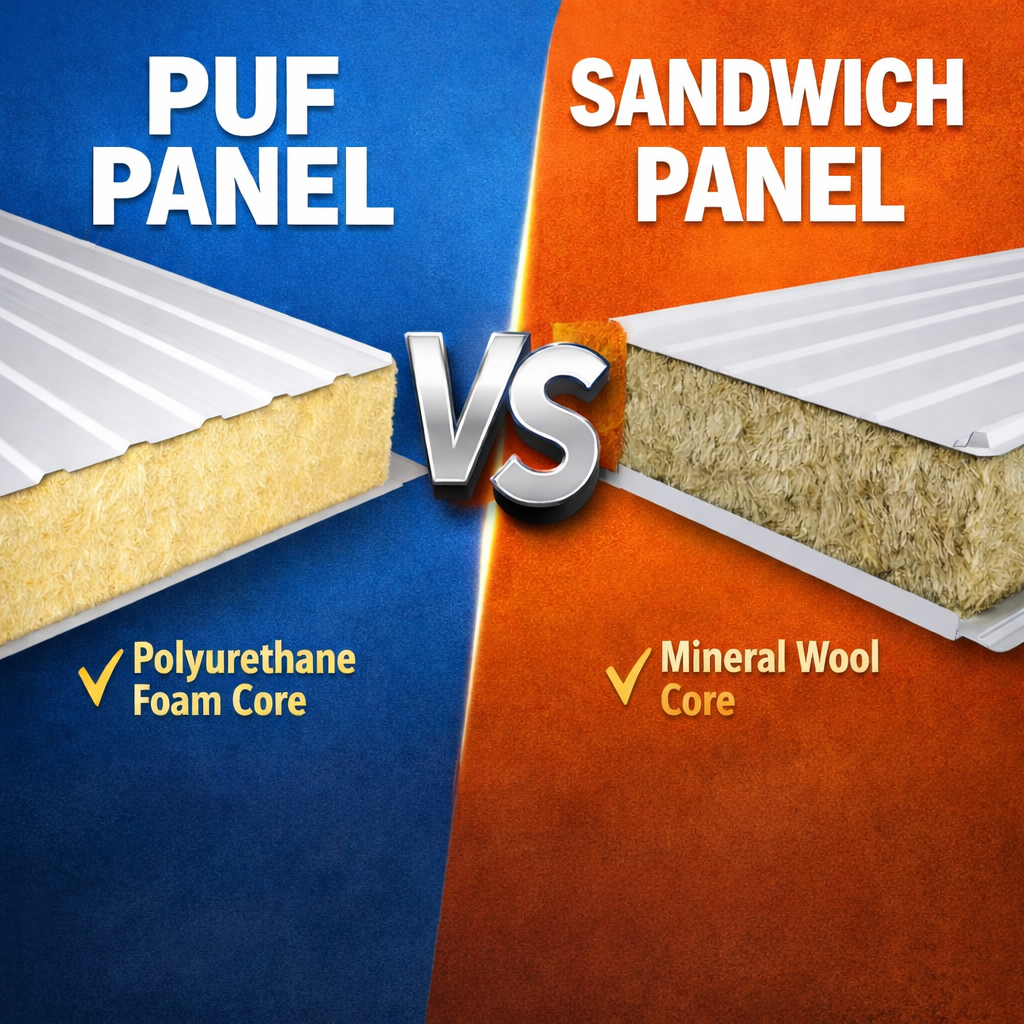
PU Foam Panels: Uses, Benefits and Key Considerations
PU foam panels are insulated building panels made with a core of polyurethane (PU) foam between two outer facings, often metal sheets. They are commonly used where thermal insulation, quick installation and a neat finish are important. In India, applications include cold rooms, warehouses, food-processing facilities, factories, commercial buildings and some agricultural structures.
What Is a PU Foam Panel?
A PU foam panel is typically a prefabricated sandwich panel. Its foam core helps reduce the transfer of heat, while the outer facings protect the core and provide strength and a finished surface. The facings may be made from coated steel or other materials, depending on the intended use.
Panels are available in different thicknesses, profiles and joint designs. The appropriate specification depends on factors such as the building’s purpose, indoor temperature requirements, local weather conditions and the supporting structure.
Common Applications
- Cold rooms and refrigerated storage: Used for facilities that need controlled temperatures, including food storage and pharmaceutical applications.
- Industrial buildings and warehouses: Suitable for walls and roofs where insulation and fast construction are priorities.
- Food-processing facilities: Can form part of an insulated building envelope when selected and installed to meet hygiene and operational requirements.
- Commercial spaces: Used in certain offices, retail premises and service buildings.
- Temporary or modular structures: Their prefabricated format can support quicker assembly and future alterations.
Benefits of PU Foam Panels
Thermal insulation: Polyurethane foam is used to limit heat flow through walls and roofs. Good insulation can help maintain indoor conditions and may reduce the workload on heating or cooling systems.
Quick installation: Panels are manufactured in advance and assembled on site. This can shorten construction time compared with some conventional wall and roof systems, provided the structure and installation are properly planned.
Lightweight construction: Their relatively low weight can make handling and installation easier. The supporting frame must still be designed for the building’s loads, including wind and roof loads.
Consistent finish: Factory-made panels can provide a uniform appearance and predictable dimensions. A well-designed joint system also helps limit air and moisture leakage.
Versatility: Panels can be specified for different building layouts and operating conditions. Options may include varied thicknesses, surface finishes and panel profiles.
Choosing the Right Panel
Before selecting a PU foam panel, consider the required indoor temperature, the local climate, building use and expected service conditions. For cold storage, for example, the design needs to account for insulation, vapour control and airtight joints. In a factory or warehouse, roof span, wind exposure, equipment loads and drainage may also influence the choice.
Ask suppliers for details about the panel’s core, facing material, thickness, joint design, applicable test reports and warranty terms. Compare complete specifications rather than relying on panel thickness alone. Where relevant, check that the proposed system complies with applicable Indian building regulations and project requirements.
Installation and Maintenance
Correct installation is essential for performance. Panels should be fixed to a suitable support structure, with joints, corners, openings and penetrations sealed as specified. Poorly sealed joints can allow air or moisture to pass through and may reduce the effectiveness of the insulation.
Inspect panels periodically for damaged facings, loose fixings, failed sealants, water entry or signs of corrosion. Repairs should use compatible materials and follow the manufacturer’s guidance. For buildings used in food or pharmaceutical operations, cleaning and hygiene requirements should also be considered when choosing finishes and joint details.
Fire and Safety Considerations
PU foam panels are not automatically fireproof. Fire performance depends on the complete panel system, including its core, facings, joints and installation. Ask for relevant fire-test documentation and ensure the system is suitable for the building’s use and complies with applicable codes. Fire barriers, detection systems and other protective measures may also be required.
During installation, follow the supplier’s instructions for handling, cutting and fixing panels. Use appropriate personal protective equipment and take care around hot work, electrical equipment and exposed foam. Any cutting or modification should be carried out in line with the project’s safety procedures.
PU and PIR Panels
PU and PIR panels are related insulated panel products, but they are not identical. PIR, or polyisocyanurate, is a distinct foam type with its own performance characteristics. Product properties can vary by formulation and manufacturer, so compare the technical and fire-test information for the specific panel being considered rather than assuming all products are equivalent.
Conclusion
PU foam panels can be a practical option for insulated buildings, cold rooms and industrial facilities. Their performance depends on selecting the right panel for the application and installing it with careful attention to joints, moisture control, structural support and fire safety. Reviewing the full product specification and consulting a qualified designer or installer can help ensure the panel system meets the project’s requirements.
8 Key Benefits of PU Foam Panels for Walls, Roofs and Cold Storage
- Excellent thermal insulation
- Lightweight and easy to handle
- Quick to install
- Helps reduce energy use
- Durable and weather-resistant
- Available in varied sizes and finishes
- Suitable for walls and roofs
- Ideal for cold rooms and warehouses
5 Disadvantages of PU Foam Panels to Consider Before Buying
- Can cost more than some conventional materials.
- Poorly sealed joints can reduce insulation performance.
- May require specialist installation and repairs.
- Fire performance varies by product and system.
- Damaged panels can be difficult to repair neatly.
Excellent thermal insulation
One of the key advantages of a PU foam panel is its excellent thermal insulation. The polyurethane foam core helps slow the transfer of heat through walls and roofs, making it easier to maintain comfortable indoor temperatures or the controlled conditions required in cold rooms. When correctly specified and installed, PU foam panels can also help reduce the demand on heating and cooling systems. Actual performance depends on the panel thickness, joint sealing and quality of installation.
Lightweight and easy to handle
PU foam panels are lightweight compared with many conventional building materials, making them easier to transport, lift and position on site. Their manageable weight can speed up installation and reduce the effort required from workers, while potentially placing less load on the supporting structure. Even so, panels should be handled and fixed according to the manufacturer’s instructions to prevent damage and ensure a secure fit.
Quick to install
PU foam panels are quick to install because they are manufactured in advance and delivered ready for assembly. Their lightweight, interlocking design can help reduce on-site work and speed up construction compared with some traditional building methods. With a suitable supporting structure and installation by trained professionals, projects can be completed more efficiently, with less disruption to day-to-day operations.
Helps reduce energy use
PU foam panels help reduce energy use by limiting heat transfer through walls and roofs. This can make it easier to maintain comfortable indoor temperatures or keep cold rooms at the required temperature, reducing the workload on heating and cooling systems. Actual energy savings depend on the building design, local climate, panel specifications and quality of installation.
Durable and weather-resistant
PU foam panels are designed to withstand everyday wear and exposure to changing weather conditions. Their protective outer facings help shield the foam core from moisture, wind and temperature variations, supporting long-lasting performance when the panels are correctly specified and installed. Regular inspection and prompt repair of damaged coatings or joints can further help maintain their durability.
Available in varied sizes and finishes
PU foam panels are available in a range of sizes, thicknesses and finishes, making them suitable for diverse building requirements. This variety helps designers and builders choose panels that fit specific wall or roofing dimensions, insulation needs and aesthetic preferences. Options such as different surface colours and profiles can also help create a consistent, finished look while reducing the need for additional cladding.
Suitable for walls and roofs
PU foam panels are suitable for both walls and roofs, making them a versatile choice for a range of buildings, including warehouses, factories and cold rooms. Using compatible panels across these areas can help create a consistent insulated building envelope, while their prefabricated design supports efficient installation. The panel type, thickness and fixing method should be selected according to the building’s use, local weather conditions and structural requirements.
Ideal for cold rooms and warehouses
PU foam panels are ideal for cold rooms and warehouses because their insulated core helps limit heat transfer and maintain more stable indoor temperatures. This can support the storage of temperature-sensitive goods and reduce the load on cooling systems. Their prefabricated design also allows for efficient installation across large wall and roof areas. For best results, choose panels suited to the required temperature and site conditions, and ensure that joints, doors and other openings are properly sealed.
Can cost more than some conventional materials.
PU foam panels can cost more than some conventional building materials, particularly when the project requires thicker panels, specialised finishes or specific performance ratings. The initial price may also include additional costs for compatible fixings, installation and sealing. Comparing the total project cost—not just the price per panel—can help assess whether the insulation, faster installation and potential energy savings justify the higher upfront investment.
Poorly sealed joints can reduce insulation performance.
Poorly sealed joints can reduce the insulation performance of PU foam panels by allowing air and moisture to pass through gaps between panels. This can make it harder to maintain the required indoor temperature and may increase the load on heating or cooling systems. Careful installation, suitable sealants and regular inspections help keep joints airtight and preserve the panel system’s effectiveness.
May require specialist installation and repairs.
PU foam panels may require specialist installation and repairs to perform as intended. Correct fitting, sealing of joints and careful treatment around openings are important for effective insulation and moisture control. If a panel is damaged or modified incorrectly, its performance may be affected, so repairs should generally be carried out by trained professionals using materials and methods recommended by the manufacturer.
Fire performance varies by product and system.
Fire performance can vary significantly between PU foam panels, as it depends on the foam formulation, facings, joints and installation details. A panel’s performance should therefore be assessed as part of the complete building system, not from the core material alone. Before choosing a product, check its relevant fire-test documentation and confirm that it meets the applicable building regulations and the specific requirements of the project.
Damaged panels can be difficult to repair neatly.
Damaged PU foam panels can be difficult to repair neatly, particularly if the outer facing is dented, torn or separated from the foam core. Repairs may leave a visible patch or uneven finish, while more extensive damage can require the affected section or entire panel to be replaced. Promptly assessing the damage and following the manufacturer’s repair guidance can help maintain the panel’s appearance and performance.