
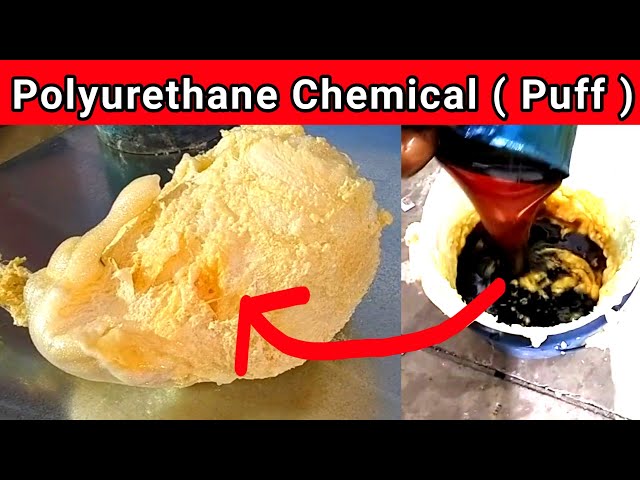
PUF Insulation Chemicals: What They Are and How They Work
PUF, or polyurethane foam, is widely used for thermal insulation in buildings, cold-storage facilities, refrigerated vehicles, pipes and industrial equipment. Its insulating performance comes from a lightweight cellular structure that slows the movement of heat. This structure is created when specific chemicals react and expand to form foam.
The exact composition of a PUF system varies according to its intended use, application method and required performance. The chemicals should be selected and handled in accordance with the supplier’s technical and safety documentation.
Key chemicals used in PUF insulation
Polyol
Polyol is one of the two main components in polyurethane production. It reacts with isocyanate to form the polymer structure of the foam. A polyol blend may also contain other ingredients, such as catalysts, flame retardants and blowing agents, depending on the product design.
Isocyanate
Isocyanates are the second principal component. A commonly used type in rigid insulation foam is polymeric methylene diphenyl diisocyanate (pMDI). When isocyanate reacts with polyol, it forms polyurethane. The reaction also generates heat, which helps the foam expand and cure.
Blowing agents
Blowing agents create the tiny cells that give PUF its characteristic structure. These cells contain gas and help reduce heat transfer through the material. Depending on the product and applicable regulations, blowing agents may include water, hydrocarbons or other approved substances. Their environmental impact and flammability vary, so the choice of blowing agent is an important part of product design.
Catalysts
Catalysts help control the speed of the chemical reactions that form the foam. They influence how quickly the material rises, cures and develops its final properties. The catalyst package is chosen to suit the application and processing conditions.
Surfactants
Surfactants help stabilise the foam as it expands. They support the formation of a more uniform cell structure, which can contribute to consistent insulation performance and product quality.
Flame retardants and other additives
Some PUF formulations include flame-retardant additives to help meet relevant fire-performance requirements. Other additives may be used to support processing, improve dimensional stability or provide specific product properties. Additives do not make every foam fireproof; the performance of the complete product must be assessed against the requirements for its intended application.
How the chemicals form an insulating foam
In many PUF systems, the polyol blend and isocyanate are brought together using equipment designed for the particular product. The reaction creates polyurethane and releases heat. The blowing agent forms gas-filled cells, causing the material to expand. Once cured, the foam provides a continuous insulation layer, subject to correct application and installation.
Insulation performance depends on more than the chemicals alone. It can also be affected by foam density, cell structure, thickness, uniformity, installation quality, ageing and exposure to moisture or heat. Product data should therefore be reviewed alongside the requirements of the building or equipment being insulated.
Safety and responsible handling
Uncured PUF components require careful handling. Isocyanates can be hazardous, particularly through inhalation or skin and eye contact, and some blowing agents and additives may have their own health or fire hazards. Application should be carried out by trained personnel using suitable ventilation, protective equipment and procedures.
- Read the product label, technical data sheet and safety data sheet before use.
- Follow the supplier’s instructions for storage, handling, application and curing.
- Use appropriate engineering controls and personal protective equipment.
- Keep chemicals away from ignition sources where flammable materials are present.
- Do not mix components or substitute ingredients unless the manufacturer approves the change.
- Manage spills, waste and empty containers according to the safety documentation and local regulations.
Spray polyurethane foam application can create airborne hazards, so the work area may need to be isolated and access restricted during application and curing. Re-entry times and ventilation requirements should be determined from the product instructions and site conditions.
Choosing a PUF insulation system
When comparing PUF products, consider the intended application, thermal performance, fire requirements, moisture conditions, installation method and relevant Indian standards or project specifications. Ask suppliers for current product documentation, including declared thermal properties, fire-test information and safe-use guidance. A qualified designer or installer can help determine whether a particular system is suitable for the project.
Conclusion
PUF insulation is made through a controlled reaction involving polyol and isocyanate, with blowing agents and other additives used to create and stabilise the foam. Understanding these components helps explain how the material delivers thermal insulation and why product selection, installation and safe handling matter. For dependable results, use a tested system and follow the manufacturer’s technical and safety instructions.
7 Key Benefits of PUF Insulation Chemicals
- Provides effective thermal insulation.
- Helps reduce heat transfer.
- Creates a lightweight foam structure.
- Expands to fill gaps when properly applied.
- Supports energy-efficient buildings and equipment.
- Can be formulated for different applications.
- Offers durable insulation when correctly installed.
PUF Insulation Chemicals: Health Risks, Environmental Concerns and Installation Challenges
- Some PUF chemicals can pose health risks during handling and application.
- Certain blowing agents may have environmental impacts or be flammable.
- Installation requires trained workers, protective equipment and good ventilation.
Provides effective thermal insulation.
PUF insulation chemicals create a lightweight foam with a fine, closed-cell structure that slows the transfer of heat. This helps maintain indoor temperatures, reduce heat gain or loss, and improve energy efficiency in buildings, cold-storage facilities and refrigerated equipment. Actual performance depends on the product, insulation thickness and quality of installation.
Helps reduce heat transfer.
PUF insulation chemicals create a lightweight foam with a fine, closed-cell structure that helps slow heat transfer. This can help maintain comfortable indoor temperatures, reduce the load on heating and cooling systems, and support energy efficiency in buildings, cold-storage facilities and other insulated spaces. The actual performance depends on the product, insulation thickness and quality of installation.
Creates a lightweight foam structure.
PUF insulation chemicals react to create a foam filled with tiny cells, forming a lightweight structure that adds little weight to a building, vehicle or piece of equipment. This makes PUF easier to handle and install than many heavier insulation materials, while still helping to reduce heat transfer.
Expands to fill gaps when properly applied.
When properly applied, PUF insulation expands to fill gaps and irregular spaces, helping create a more continuous insulation layer. This can reduce uninsulated areas around joints, corners and hard-to-reach sections, supporting effective thermal performance. Correct application by trained professionals is important to ensure consistent coverage and avoid defects.
Supports energy-efficient buildings and equipment.
PUF insulation chemicals help create a lightweight foam with a fine, closed-cell structure that slows heat transfer. When correctly selected and installed, this insulation can reduce unwanted heat gain or loss in buildings, cold rooms, pipes and equipment, helping maintain indoor or process temperatures with less reliance on heating and cooling systems. This can support lower energy use and more energy-efficient operation.
Can be formulated for different applications.
PUF insulation chemicals can be formulated to suit a wide range of applications, from building roofs and walls to cold-storage units, pipes and refrigerated vehicles. By adjusting the formulation, manufacturers can tailor properties such as foam density, thermal performance, curing time and application method to meet specific project requirements. This flexibility makes PUF a versatile insulation option, though the selected product should always be appropriate for its intended use and installed according to the manufacturer’s instructions.
Offers durable insulation when correctly installed.
PUF insulation offers durable thermal performance when correctly installed and protected from damage. Its foam structure can provide a continuous insulation layer, helping limit heat transfer over time. Suitable preparation, correct application and adherence to the manufacturer’s instructions are essential for achieving a reliable, long-lasting result.
Some PUF chemicals can pose health risks during handling and application.
Some chemicals used in PUF insulation can pose health risks during handling and application, particularly before the foam has fully cured. Exposure to isocyanates and other ingredients may irritate the skin, eyes or respiratory system, so installation should be carried out by trained professionals using suitable ventilation and protective equipment. Always follow the product’s safety data sheet and manufacturer’s instructions.
Certain blowing agents may have environmental impacts or be flammable.
Certain blowing agents used in PUF insulation can have environmental impacts, while some may also be flammable. Their effects vary by chemical type, so it is important to choose products that comply with applicable environmental and safety requirements. Proper storage, handling and installation, following the manufacturer’s instructions, can help reduce risks.
Installation requires trained workers, protective equipment and good ventilation.
PUF insulation chemicals require careful handling during installation, so the work should be carried out by trained workers using suitable protective equipment and adequate ventilation. These precautions help reduce exposure to potentially harmful fumes and skin or eye contact, but they can increase installation costs and make the process more complex.