
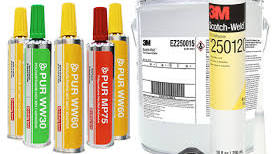
PUR Hot Melt Glue: How It Works, Benefits and Applications
PUR hot melt glue, also known as polyurethane reactive hot melt adhesive, is used when a strong, durable bond is needed across a range of materials. It is applied in a molten state, much like a conventional hot melt adhesive, but then reacts with moisture in the air or on the substrate to form a more permanent bond.
What is PUR hot melt glue?
PUR stands for polyurethane. Unlike conventional hot melt glue, which generally hardens as it cools, PUR hot melt undergoes two stages. First, it cools and develops enough strength to hold the bonded parts in place. It then reacts with moisture and cures further, forming a cross-linked polyurethane bond.
This combination of quick initial setting and subsequent chemical curing makes PUR hot melt useful in applications where both efficient production and long-term bond performance matter.
How does it work?
- Heating: The adhesive is heated in suitable dispensing equipment until it reaches its recommended application temperature.
- Application: It is applied to one or both surfaces as a bead, film or other suitable pattern.
- Assembly: The parts are brought together while the adhesive is still workable. Pressure may be applied to ensure good contact.
- Cooling and curing: The adhesive cools to provide initial handling strength, then continues curing as it reacts with moisture. Full cure time varies according to the product, temperature, humidity, adhesive quantity and materials being bonded.
Key benefits
- Strong, durable bonds: Once cured, PUR can provide good resistance to heat, moisture and many environmental conditions. Actual performance depends on the formulation and application.
- Good adhesion to varied materials: Depending on the grade, it may bond materials such as wood, plastics, metal, textiles, foam and laminates.
- Fast initial handling: Cooling helps the bond hold soon after assembly, while the chemical cure develops over time.
- Potential for thin bond lines: Some applications can use a relatively small amount of adhesive, which may help reduce visible glue lines.
- Useful across manufacturing processes: PUR hot melt is available for different dispensing methods and production requirements.
Common applications
PUR hot melt glue is used in a range of industrial and commercial settings, including:
- Furniture and woodworking, such as edge banding and profile wrapping
- Automotive interiors and component assembly
- Bookbinding and product assembly
- Textile, footwear and upholstery manufacturing
- Packaging and filter assembly
- Electronics and appliance manufacturing, where a suitable grade is specified
PUR hot melt compared with conventional hot melt
Conventional hot melt adhesives usually form their bond mainly by cooling. PUR hot melt also cools to provide initial strength, but then undergoes a moisture-triggered chemical reaction. This can improve the final bond’s resistance and durability in appropriate applications.
PUR also requires more careful handling and equipment practices. It may need protected storage and dispensing systems to limit exposure to moisture before use. Conventional hot melts can be simpler to manage in some production environments, so the best choice depends on the materials, operating conditions and required bond performance.
Choosing the right PUR adhesive
Before selecting a product, consider the materials to be bonded, the required bond strength, service temperature, exposure to moisture or chemicals, production speed and dispensing method. Surface cleanliness and preparation are also important. Test the adhesive with the actual materials and process conditions, and refer to the supplier’s technical data sheet for application temperature, open time, pressing requirements and cure time.
Handling and storage
PUR hot melt is applied at high temperatures, so appropriate equipment, training and protective measures are essential to prevent burns. Some PUR formulations contain reactive isocyanate groups. Follow the product safety data sheet and workplace requirements, including recommended ventilation, personal protective equipment and spill procedures.
Keep the adhesive sealed and store it as directed by the supplier. Exposure to moisture can cause premature reaction or affect product performance. Use compatible equipment, follow cleaning and maintenance instructions, and do not exceed the recommended processing temperature.
Conclusion
PUR hot melt glue combines the fast initial hold of a hot melt adhesive with a moisture-triggered cure that can deliver a durable bond. It is used in industries ranging from furniture manufacturing to automotive and product assembly. Choosing the right formulation—and following the supplier’s application, storage and safety guidance—is essential for achieving consistent results.
PUR Hot Melt Glue: 7 Frequently Asked Questions Answered
- What is PUR hot melt glue?
- How does PUR hot melt glue work?
- What materials can PUR hot melt glue bond?
- What are the main benefits of PUR hot melt glue?
- How long does PUR hot melt glue take to cure?
- How should PUR hot melt glue be stored and handled safely?
- How does PUR hot melt glue differ from conventional hot melt adhesive?
What is PUR hot melt glue?
PUR hot melt glue, or polyurethane reactive hot melt adhesive, is an adhesive that is heated and applied in a molten state. It cools to provide an initial hold, then reacts with moisture in the air or on the materials being bonded to cure further and form a durable bond. It is used in applications such as furniture, woodworking, automotive interiors and product assembly. Its suitability depends on the materials, working conditions and product formulation, so always follow the supplier’s application and safety instructions.
How does PUR hot melt glue work?
PUR hot melt glue is heated until it melts, then applied to one or both surfaces to be bonded. As it cools, it sets quickly and provides initial holding strength. It then reacts with moisture in the air or on the materials and cures further, forming a durable polyurethane bond. The curing time depends on the adhesive formulation, the materials and the surrounding temperature and humidity.
What materials can PUR hot melt glue bond?
PUR hot melt glue can bond a variety of materials, including wood, plastics, metal, textiles, foam and laminates. The exact materials it can bond depend on the adhesive formulation and the condition of the surfaces. For the best results, ensure surfaces are clean and follow the manufacturer’s application guidance. Testing the adhesive on the materials in your specific application is recommended.
What are the main benefits of PUR hot melt glue?
PUR hot melt glue offers a strong, durable bond and a quick initial hold: it sets as it cools, then cures further when it reacts with moisture. Depending on the formulation and materials, it can provide good resistance to heat and moisture and bond a wide range of substrates, including wood, plastics, textiles and metal. Its strong performance may also allow a thin bond line, making it useful for applications such as furniture, automotive interiors and product assembly.
How long does PUR hot melt glue take to cure?
PUR hot melt glue develops an initial hold as it cools, but full curing takes longer because the adhesive reacts with moisture. Depending on the product, bond thickness, materials, temperature and humidity, full cure may take around 24–72 hours. Thicker adhesive layers or dry conditions can extend this time, so avoid stressing the bond until it has cured and check the product’s technical data sheet for specific guidance.
How should PUR hot melt glue be stored and handled safely?
Store PUR hot melt glue in its original, tightly sealed container in a cool, dry place, following the manufacturer’s temperature and shelf-life recommendations; keep it protected from moisture, which can cause premature curing. Handle it using compatible, well-maintained dispensing equipment, and wear suitable protective equipment, such as heat-resistant gloves and eye protection, to reduce the risk of burns from hot adhesive. Some formulations contain reactive isocyanates, so check the safety data sheet and follow its guidance on ventilation, protective equipment and safe handling.
How does PUR hot melt glue differ from conventional hot melt adhesive?
PUR hot melt glue differs from conventional hot melt adhesive in how it forms its final bond. Conventional hot melt adhesive generally sets as it cools, while PUR hot melt also cools to provide an initial hold and then reacts with moisture to cure further, forming a cross-linked polyurethane bond. This can offer greater durability and resistance to heat and moisture, depending on the formulation and application. However, PUR requires careful storage and handling to prevent premature reaction, so the product’s technical and safety instructions should always be followed.