
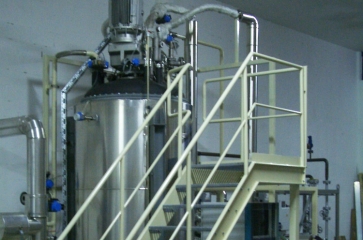
Prepolymer: A Key Building Block in Polyurethane Manufacturing
A prepolymer is an intermediate material made by reacting selected chemical ingredients to form a product that is only partly polymerised. In polyurethane manufacturing, prepolymers provide a useful way to control processing and tailor the properties of the finished product.
What is a polyurethane prepolymer?
Polyurethane prepolymers are generally produced by reacting a polyol with an excess of a diisocyanate or polyisocyanate. The resulting material contains polyurethane chains and, in many common formulations, reactive isocyanate (NCO) groups at the chain ends. These groups can react further with polyols, amines or moisture to form the final polymer.
The formulation and manufacturing conditions—including the choice of raw materials, their proportions, temperature and reaction time—help determine the prepolymer’s viscosity, reactivity and final performance.
How prepolymers are used
A prepolymer separates part of the polyurethane-forming reaction from the final application. The manufacturer can prepare and quality-check the intermediate material, which is then used to produce a finished product in a later processing step. This can make it easier to handle certain formulations and achieve consistent results.
Prepolymers are commonly used in:
- Coatings, adhesives, sealants and elastomers
- Moisture-curing products, including some construction sealants and adhesives
- Cast polyurethane parts, rollers and wheels
- Flexible and rigid foam systems
- Speciality products requiring particular mechanical or chemical properties
Types of polyurethane prepolymer
NCO-terminated prepolymers contain reactive isocyanate groups. They may be combined with a curing agent, such as a polyol or amine, or formulated to cure through a reaction with moisture, depending on the product design.
Moisture-curing prepolymers react with water in the surrounding air or substrate. This can be useful in one-component products, where curing begins after application. The curing rate and depth depend on factors such as humidity, temperature, formulation and the thickness of the applied material.
Other prepolymer designs may use different end groups or be developed for specific processing needs. The appropriate design depends on the intended application and the performance required.
Why use a prepolymer?
Prepolymer technology gives formulators flexibility to adjust properties such as hardness, elasticity, abrasion resistance, adhesion and chemical resistance. It can also help control viscosity and curing behaviour. These benefits depend on the complete formulation and manufacturing process; a prepolymer alone does not determine the final product’s performance.
Choosing the right prepolymer involves considering the application method, substrate, service conditions, cure requirements and relevant regulatory or customer specifications. Compatibility with other ingredients and careful control of moisture can also be important.
Handling and safety
Some polyurethane prepolymers contain residual free isocyanate. Isocyanates can present health risks, particularly through inhalation or skin contact, and moisture-reactive materials may release carbon dioxide during curing. Safe handling requires following the product’s safety data sheet, using suitable ventilation and personal protective equipment, and applying appropriate storage and spill-control procedures.
Prepolymers should be stored in suitable, tightly closed containers under the conditions specified by the supplier. Contamination with water or other incompatible materials can affect product quality and may cause pressure to build up in a container.
Looking ahead
Developments in polyurethane prepolymer technology continue to focus on performance, process efficiency and responsible product design. Areas of interest include improving durability, reducing emissions during application, increasing the use of renewable raw materials where technically suitable, and supporting repair, reuse or recycling pathways. Each option needs to be assessed for the product’s full life cycle and intended use.
Conclusion
Prepolymers are versatile intermediates that help manufacturers create polyurethane products for a wide range of applications. By selecting an appropriate prepolymer and controlling formulation, processing and safety practices, producers can develop materials with properties suited to specific industrial and consumer needs.
5 Key Benefits of Prepolymers in Polyurethane Production
- Helps tailor polyurethane properties.
- Supports consistent product quality.
- Offers flexibility in processing.
- Enables a wide range of applications.
- Can improve control over curing behaviour.
Prepolymer Drawbacks: Isocyanate Hazards, Moisture Sensitivity and Specialised Handling Requirements
- Some prepolymers can contain hazardous isocyanates.
- Moisture can affect storage stability and product quality.
- Formulation and handling may require specialised equipment and expertise.
Helps tailor polyurethane properties.
Prepolymers help manufacturers tailor polyurethane properties to suit a specific application. By selecting the type of polyol and isocyanate, adjusting their proportions and choosing suitable curing conditions, formulators can influence characteristics such as hardness, flexibility, strength, abrasion resistance and chemical resistance. This flexibility makes prepolymer technology useful across a wide range of products, from soft elastomers to durable coatings and sealants.
Supports consistent product quality.
Prepolymers can support consistent product quality by allowing key ingredients to be reacted and controlled before the final manufacturing stage. With a well-defined formulation and carefully monitored production conditions, manufacturers can achieve more predictable processing and performance from batch to batch. This helps ensure that finished polyurethane products meet the required specifications for properties such as strength, flexibility and durability.
Offers flexibility in processing.
Prepolymers offer flexibility in processing because their formulation and reactivity can be tailored to suit different manufacturing methods and application requirements. Their viscosity and curing behaviour can be adjusted, making them suitable for processes such as casting, coating, bonding and sealing. This helps manufacturers manage application, working time and final product properties more effectively.
Enables a wide range of applications.
One of the key advantages of prepolymers is their versatility, which enables their use across a wide range of applications. By adjusting the raw materials and formulation, manufacturers can develop polyurethane products with properties suited to different needs—from coatings, adhesives and sealants to foams, elastomers and durable components. This flexibility helps prepolymers serve industries such as construction, automotive, furniture and manufacturing.
Can improve control over curing behaviour.
Prepolymers can improve control over curing behaviour by allowing formulators to tailor how quickly a polyurethane system sets and develops its final properties. The choice of prepolymer, curing agent and formulation can influence working time and cure rate, helping the product suit its application and processing conditions. Actual curing behaviour also depends on factors such as temperature, humidity, substrate and application thickness.
Some prepolymers can contain hazardous isocyanates.
Some prepolymers may contain free isocyanates, which can pose health risks if inhaled or if they come into contact with the skin or eyes. Exposure may cause irritation, breathing difficulties or sensitisation, making future reactions possible even at low exposure levels. Appropriate ventilation, suitable personal protective equipment and careful handling are essential; users should always follow the product’s safety data sheet.
Moisture can affect storage stability and product quality.
Moisture can affect the storage stability and quality of a prepolymer, particularly when it contains reactive isocyanate groups. Exposure to water may trigger unwanted reactions, causing changes in viscosity, reduced performance or the formation of gas and pressure inside the container. To help maintain product quality, prepolymers should be stored in tightly sealed containers and handled according to the supplier’s instructions.
Formulation and handling may require specialised equipment and expertise.
Working with prepolymers can require specialised equipment and technical expertise. Accurate control of temperature, mixing, moisture and reaction conditions is important to maintain product quality and achieve consistent results. This can increase setup and operating costs, particularly for smaller manufacturers, while inadequate handling or process control may affect performance and create safety risks. Companies may therefore need trained staff, suitable facilities and procedures that follow the supplier’s safety guidance.