
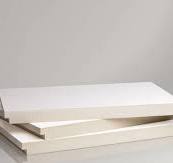
Solid Rigid Polyurethane Foam: Properties, Uses and Considerations
Solid rigid polyurethane (PUR) foam is a lightweight, durable material used where thermal insulation, structural support or both are required. It is made by reacting polyols with isocyanates, together with additives that control properties such as cell structure, curing and fire performance. The resulting foam has a firm structure and is commonly produced as boards, panels, moulded components or as insulation formed in place.
How rigid polyurethane foam is made
During manufacture, the reacting ingredients expand and cure into a cellular material. Most rigid polyurethane foam has a predominantly closed-cell structure: small gas-filled cells are enclosed by thin polymer walls. This structure helps limit heat transfer and can also reduce the movement of moisture through the foam. Formulations and production methods vary according to the intended application.
Rigid polyurethane foam is often supplied as insulation boards or used as the core of insulated panels. It can also be sprayed onto a surface or injected into a cavity, where it expands to fill the space. Correct mixing, application and curing are important for achieving consistent performance.
Key properties
- Thermal insulation: The closed-cell structure provides effective insulation for its thickness, making the material useful where space is limited.
- Low weight: It can provide insulation without adding as much weight as many solid construction materials.
- Versatile forms: Foam can be manufactured in different densities and shapes, or incorporated into composite panels and equipment.
- Dimensional stability: Properly specified and installed foam can retain its shape in service, although performance depends on the formulation and surrounding conditions.
- Moisture resistance: Closed cells can help restrict water absorption, but joints, facings and installation details still need to be managed carefully.
These properties are not identical across all products. Density, cell structure, facings, manufacturing quality and service conditions all influence performance. Product data and test results should therefore be checked for the specific application.
Common applications
Solid rigid polyurethane foam is used across construction, industry and transport. Typical applications include:
- insulated roof, wall and floor systems;
- the core of insulated sandwich panels used in buildings and industrial facilities;
- refrigerators, freezers and cold-storage rooms;
- insulation for pipes, tanks and process equipment;
- temperature-controlled vehicles and containers; and
- moulded components that need a combination of low weight and stiffness.
In India, the material can support energy-efficient building design and temperature-controlled storage and transport. The right insulation system depends on the local climate, building design, operating temperatures, moisture exposure and applicable regulations.
Installation and performance
Insulation performance depends on more than the foam itself. Gaps, poorly sealed joints, thermal bridges and unsuitable fixing details can reduce the effectiveness of an assembly. In buildings, designers should consider ventilation, condensation control and compatibility with adjacent materials. For spray or injected foam, the substrate, site conditions and application process should be assessed by trained professionals.
Rigid polyurethane foam is combustible. Its use in buildings and other settings must meet relevant fire-safety requirements. Depending on the application, the foam may need protective linings, facings or barriers. Fire performance should be assessed for the complete assembly, rather than inferred from the foam alone.
Environmental and safety considerations
Insulation can help reduce energy use during the operating life of a building or appliance. However, the overall environmental impact of a foam product also depends on its raw materials, manufacturing process, blowing agent, service life and end-of-life treatment. Some products can be recovered or recycled through suitable processes, but availability varies by location and product type.
Manufacturing and installation involve chemicals that require appropriate controls. Workers should follow product safety information, use specified protective equipment and ensure suitable ventilation. Cutting or removing foam should also be carried out with care, particularly where dust, fumes or older materials may be present.
Choosing a suitable product
When specifying solid rigid polyurethane foam, consider the required thermal performance, thickness, density, compressive strength, moisture conditions, fire requirements and intended service life. Check technical documentation and certifications relevant to the application, and ensure that installation follows the manufacturer’s instructions and local requirements.
With appropriate product selection and detailing, solid rigid polyurethane foam can provide effective insulation and useful structural support in a wide range of applications.
5 Key Benefits of Solid Rigid Polyurethane Foam
- Excellent thermal insulation
- Lightweight yet strong
- Moisture-resistant closed-cell structure
- Versatile for many applications
- Helps improve energy efficiency
7 Disadvantages of Solid Rigid Polyurethane Foam
- Combustible and may require protective barriers.
- Can release hazardous fumes when burning.
- Requires careful handling during installation.
- Performance depends on correct installation.
- Can be damaged by UV exposure.
- Recycling options may be limited.
- May be difficult to remove or repair.
Excellent thermal insulation
Solid rigid polyurethane foam offers excellent thermal insulation because its closed-cell structure traps gas within tiny cells, slowing the transfer of heat. This high insulating performance can help maintain comfortable indoor temperatures and reduce heating or cooling needs. It is especially useful where space is limited, as effective insulation can often be achieved with a relatively thin layer. Actual performance depends on the product, thickness, installation quality and surrounding conditions.
Lightweight yet strong
Solid rigid polyurethane foam is lightweight yet strong, offering useful structural support without adding significant weight. This makes it easier to handle and install, while helping reduce the load on buildings, vehicles and equipment. Its favourable strength-to-weight balance also makes it suitable for applications such as insulated panels, where durability and efficient insulation are both important.
Moisture-resistant closed-cell structure
Solid rigid polyurethane foam has a closed-cell structure that helps limit the absorption and movement of moisture through the material. This can help preserve its insulation performance in damp or humid conditions and make it suitable for applications such as roofs, walls, cold-storage facilities and pipe insulation. However, moisture resistance depends on the product and installation; joints, edges and surrounding materials should also be properly sealed and protected.
Versatile for many applications
Solid rigid polyurethane foam is versatile and can be manufactured in different shapes, sizes and densities to suit a wide range of applications. It is used in building insulation, insulated panels, refrigeration equipment, cold-storage facilities, pipes and transport systems. Its ability to combine low weight with thermal insulation and structural support makes it a practical choice across construction, manufacturing and other industries.
Helps improve energy efficiency
Solid rigid polyurethane foam helps improve energy efficiency by providing effective thermal insulation with relatively little thickness. Its closed-cell structure slows heat transfer, helping buildings and equipment stay cooler in warm conditions and retain heat when needed. This can reduce the demand on heating, ventilation and air-conditioning systems, potentially lowering energy use and operating costs. The actual savings depend on the design, installation quality, climate and how the insulated space is used.
Combustible and may require protective barriers.
Solid rigid polyurethane foam is combustible, so it may contribute to the spread of fire if left exposed. In building and industrial applications, it may need to be covered by suitable protective barriers, such as approved linings or facings, to meet fire-safety requirements. The level of protection depends on the product, its location and the design of the complete assembly, so local regulations and product specifications should always be followed.
Can release hazardous fumes when burning.
When exposed to fire, solid rigid polyurethane foam can burn and release hazardous smoke and fumes, which may include toxic gases. These emissions can pose serious risks to people nearby, particularly in enclosed or poorly ventilated spaces. The foam should therefore be used with appropriate fire-protection measures, such as suitable protective linings, and building designs should follow applicable fire-safety requirements. During a fire, occupants should leave the area and follow emergency guidance rather than attempt to handle burning foam.
Requires careful handling during installation.
Solid rigid polyurethane foam requires careful handling during installation to ensure it performs as intended. Cutting, fitting or applying the foam incorrectly can damage its edges, leave gaps or reduce the effectiveness of the insulation. Installers should follow the manufacturer’s instructions, use suitable protective equipment and take care to seal joints properly. For spray or injected foam, trained professionals should manage the application and curing process.
Performance depends on correct installation.
The performance of solid rigid polyurethane foam depends greatly on correct installation. Gaps, uneven application, poorly sealed joints or unsuitable fixing methods can reduce insulation efficiency and allow air or moisture to pass through. For spray-applied or cavity-filled foam, the substrate, mixing and curing conditions also need to be controlled. Professional installation in accordance with the manufacturer’s instructions helps the foam deliver its intended performance and service life.
Can be damaged by UV exposure.
Solid rigid polyurethane foam can be damaged by prolonged exposure to ultraviolet (UV) radiation from sunlight. The surface may discolour, become brittle or gradually degrade, which can affect its appearance and performance. To protect the foam, it should be covered with a suitable UV-resistant coating, facing or cladding, especially when used outdoors.
Recycling options may be limited.
Recycling options for solid rigid polyurethane foam may be limited, as its durable, cross-linked structure can make it difficult to break down and reuse. Foam bonded to facings or other materials can be especially challenging to separate, and recycling facilities may not be readily available in every region. As a result, offcuts and end-of-life products may be sent to landfill or other disposal routes. Checking local recovery services and choosing products designed for easier disassembly can help reduce waste.
May be difficult to remove or repair.
Solid rigid polyurethane foam can be difficult to remove or repair once it has cured, particularly when it is bonded to a substrate or injected into a cavity. Removing it may require cutting or scraping, which can damage nearby surfaces and create dust or debris. Repairs can also be challenging because new foam may not bond or match the existing material perfectly, so careful assessment and skilled work may be needed.