
Applications of Polyurethane (PU) Foam
Polyurethane (PU) foam is a versatile material used across many industries. It can be made in different forms, from soft and flexible cushioning to firm, rigid insulation. This range of properties makes PU foam suitable for products that need comfort, thermal insulation, support, sealing or protection.
What Is PU Foam?
PU foam is produced by reacting polyurethane components to create a cellular structure. The size and arrangement of the cells, along with the formulation, determine whether the finished foam is flexible, semi-rigid or rigid. Manufacturers can tailor density, firmness and other properties to suit a particular application.
Common Applications of PU Foam
Furniture and Bedding
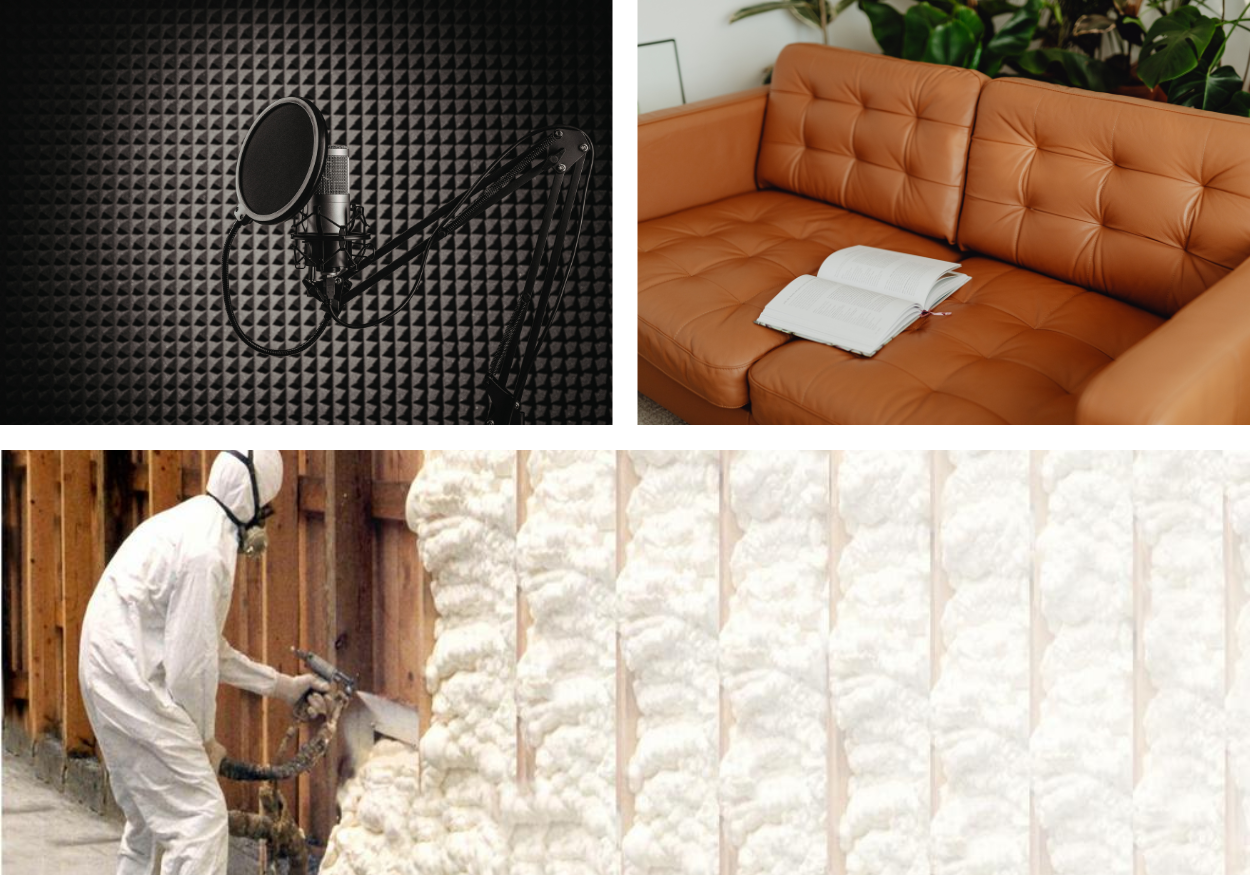
Flexible PU foam is widely used in sofas, chairs, mattresses and pillows. Its cushioning properties help provide comfort and support, while different foam grades can be selected for different levels of firmness and resilience. It is also used in upholstered furniture and seating for offices, cinemas and other public spaces.
Automotive Interiors
PU foam is used in vehicle seats, headrests, armrests and interior trim. It can help improve seating comfort and support, and can be moulded to fit complex shapes. Depending on the design, foam may also contribute to sound absorption and vibration control within a vehicle.
Building and Construction
Rigid PU foam is used for thermal insulation in buildings. It can be incorporated into insulated panels, roofs, walls, floors, doors and cold-storage structures. Its insulating performance can help reduce heat transfer and support more efficient heating and cooling when the building envelope is properly designed and installed.
PU foam is also used in sealants and gap-filling products. These products can help seal joints and openings, but the correct formulation and application method are important. Installation should follow the manufacturer’s instructions, particularly for ventilation, curing and fire-safety requirements.
Refrigeration and Cold Chain
Rigid PU foam is commonly used as insulation in refrigerators, freezers, refrigerated display cabinets and cold rooms. In transport and storage, insulated panels and containers help maintain controlled temperatures for food, medicines and other temperature-sensitive goods.
Packaging and Product Protection
Flexible and moulded PU foam can cushion delicate products during storage and transport. It is used in protective packaging for electronics, instruments, appliances and other items that may be affected by impact or vibration. The foam can be shaped to fit the product and help limit movement inside the package.
Footwear and Clothing
PU materials are used in footwear components such as insoles, midsoles and cushioning elements. They can provide a balance of comfort, flexibility and wear resistance. PU foam is also used in some garments and accessories where lightweight cushioning or padding is required.
Industrial Uses
In industrial settings, PU foam may be used for sealing, cushioning, filtration, flotation and vibration management. Flexible foam can absorb sound or support equipment, while rigid foam can provide insulation in machinery, tanks and specialist structures. The appropriate grade depends on operating conditions such as temperature, moisture, chemicals and mechanical load.
Choosing the Right PU Foam
Choosing a suitable foam involves more than selecting a density or firmness. Important considerations include:
- Application: Determine whether the foam is intended for cushioning, insulation, sealing or protection.
- Performance requirements: Consider support, thermal performance, resilience, compression behaviour and durability.
- Environment: Check exposure to moisture, heat, sunlight, chemicals and repeated use.
- Fire and building requirements: Confirm that the product meets applicable standards and project specifications.
- Installation: Follow product guidance and use trained professionals where required, especially for sprayed or expanding foams.
Safety and Responsible Use
PU foam products vary in composition and intended use. During installation or processing, follow the supplier’s safety instructions, including requirements for ventilation and personal protective equipment. Foam should not be exposed to heat or ignition sources beyond the conditions specified for the product. In buildings and vehicles, the complete system—including coverings, adhesives and installation details—should be assessed against relevant fire-safety requirements.
At the end of its useful life, PU foam may be difficult to separate from other materials. Recycling and recovery options depend on the product type and local facilities. Selecting durable products, avoiding unnecessary waste and checking available take-back or recycling schemes can support more responsible use.
Conclusion
PU foam serves a wide range of applications, from everyday mattresses and vehicle seats to building insulation and cold-chain equipment. Its adaptability allows manufacturers to develop products with specific cushioning, insulating and protective properties. Careful product selection, correct installation and responsible end-of-life planning help ensure that PU foam performs effectively throughout its service life.
7 Essential Tips for Safe and Effective PU Foam Application
- Wear gloves and safety glasses during application.
- Work in a well-ventilated area.
- Keep foam away from flames and heat.
- Cover nearby surfaces before spraying.
- Shake the can well and follow its label.
- Fill gaps only partly; the foam expands as it cures.
- Let it cure fully before trimming excess foam.
Wear gloves and safety glasses during application.
Wear suitable gloves and safety glasses when applying PU foam to help protect your skin and eyes from splashes and accidental contact. Follow the product label and safety instructions, and use any additional protective equipment recommended by the manufacturer.
Work in a well-ventilated area.
Always apply PU foam in a well-ventilated area to help disperse vapours and reduce inhalation exposure. Open windows and doors or use suitable mechanical ventilation, and follow the product label and safety instructions. Where recommended, wear the specified personal protective equipment, and keep others away from the work area until the foam has cured and the space is safe to re-enter.
Keep foam away from flames and heat.
Keep PU foam away from flames, sparks and sources of heat, as it can ignite or be damaged when exposed to high temperatures. During application and curing, follow the product label and safety instructions, maintain good ventilation, and keep smoking materials and hot work well clear of the area.
Cover nearby surfaces before spraying.
Before spraying PU foam, cover nearby floors, walls, windows, furniture and fixtures with suitable protective sheets or masking material. Spray foam can expand and stick firmly to surfaces, making spills difficult to remove once cured. Secure the coverings so they do not shift, and keep the work area clear of items that should not be exposed. Always follow the product label and use appropriate protective equipment.
Shake the can well and follow its label.
Before applying PU foam, shake the can well as directed on the label to help mix its contents evenly. Read and follow all label instructions, including those for application, safety, ventilation and curing time, as products may differ.
Fill gaps only partly; the foam expands as it cures.
When applying PU foam, fill gaps only partly, as the foam expands while it cures. Overfilling can cause the foam to bulge beyond the opening and make trimming or finishing more difficult. Follow the product instructions for the recommended fill level and allow the foam to cure fully before trimming.
Let it cure fully before trimming excess foam.
Allow PU foam to cure fully before trimming any excess. Cutting it too early can disturb the foam’s structure, affect the quality of the finish and leave uneven edges. Check the product instructions for the recommended curing time, as it can vary with the foam type, temperature and humidity.