
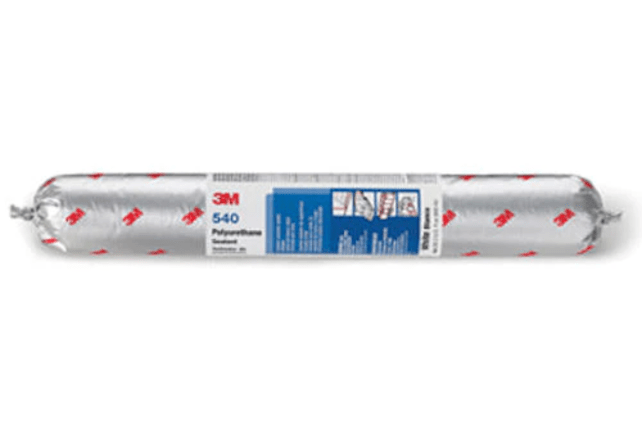
3M 540 Polyurethane Sealant: Uses, Benefits and Application Tips
3M 540 polyurethane sealant is a one-part sealant designed to form a flexible seal on suitable surfaces. Polyurethane sealants are commonly used where a joint needs to accommodate movement while helping prevent the passage of water, air or dust. The exact performance and approved uses can vary by product version and market, so check the label and current 3M technical data sheet before specifying or using it.
What is 3M 540 polyurethane sealant?
3M 540 is a moisture-curing polyurethane product. Once applied, it reacts with moisture in the air and gradually forms a flexible, rubber-like seal. It is supplied ready to use, rather than requiring separate mixing, and is typically applied from a cartridge using a suitable sealant gun.
Depending on the product version, it may be suitable for sealing or bonding selected materials used in transport, fabrication, construction or equipment applications. Compatibility should always be confirmed for the specific substrate and service conditions.
Key characteristics
- Flexible after curing: Helps accommodate movement in appropriately designed joints.
- One-part formulation: Does not require mixing before application.
- Moisture curing: Curing begins at the exposed surface and progresses inward.
- Sealing and bonding potential: May be used for particular sealing or bonding tasks when permitted by the product documentation.
These are general characteristics of the product type, not a substitute for the technical data sheet. Do not assume a particular colour, paintability, cure rate, chemical resistance or substrate compatibility without checking the packaging and current product information.
Common uses
Polyurethane sealants are often considered for joints and seams in applications where a durable, flexible seal is required. Whether 3M 540 is appropriate depends on factors such as the materials being joined, joint design, exposure to water or chemicals, temperature range and expected movement. For demanding applications, confirm suitability with 3M or the project’s technical specialist before use.
How to apply it
- Check the product information. Confirm that the sealant is suitable for the application, substrates and expected conditions. Review the stated shelf life and storage requirements.
- Prepare the surfaces. Remove dust, oil, grease, loose coatings and other contaminants. Surfaces should be prepared using the method recommended for the materials involved.
- Use a primer only if specified. Some surfaces may require a primer, while others may not. Follow the product guidance rather than applying primer by default.
- Apply evenly. Cut the cartridge nozzle to the required bead size and apply a continuous bead, avoiding gaps or trapped air.
- Tool the bead promptly. Shape the sealant within the working time stated in the product documentation, using an appropriate tooling method.
- Allow it to cure. Keep the joint undisturbed for the recommended period. Cure rate depends on conditions such as temperature, humidity, bead dimensions and access to moisture.
Important precautions
Use the sealant only for applications described or approved by the manufacturer. Do not treat it as a structural adhesive or use it to support loads unless the product documentation specifically permits that use. Avoid application to incompatible materials or surfaces that have not been properly prepared.
Follow the safety instructions on the label and safety data sheet. Use suitable gloves and eye protection, and provide adequate ventilation. Uncured sealant can be difficult to remove, so protect nearby surfaces and clean tools promptly using a method approved for the product. Once cured, removal may require mechanical methods.
Choosing the right sealant
Before buying 3M 540, confirm the exact product name and packaging, as products and specifications may differ between markets. Compare the intended joint, substrate compatibility, movement requirements, exposure conditions and curing requirements against the current 3M technical data sheet. This helps ensure the sealant is suitable for the job and is applied correctly.
3M 540 Polyurethane Sealant FAQs: Uses, Price in India, Drying Time and Disadvantages
- What is polyurethane sealant used for?
- What is the 3M adhesive for polyurethane?
- What is the price of 3m 540 PU sealant?
- How long does 3M polyurethane take to dry?
- What are the disadvantages of polyurethane sealant?
- What is high performance polyurethane sealant used for?
What is polyurethane sealant used for?
Polyurethane sealant is used to seal joints, seams and gaps where a flexible, durable barrier is needed. It can help prevent the entry of water, air and dust while accommodating some movement between surfaces, making it useful in suitable construction, transport and repair applications. Check the 3M 540 product data sheet to confirm compatibility with the materials and conditions involved.
What is the 3M adhesive for polyurethane?
3M 540 is a one-part, moisture-curing polyurethane sealant that can also provide bonding in applications approved by 3M. It forms a flexible bond and seal, but its suitability for bonding polyurethane to itself or to other materials depends on the specific surfaces and conditions. Check the current 3M technical data sheet for compatibility and surface-preparation instructions before use.
What is the price of 3m 540 PU sealant?
The price of 3M 540 PU sealant can vary depending on the pack size, colour, supplier, location and availability. For the most accurate current price, check with an authorised 3M distributor or local industrial supplier, and confirm that the product specification and packaging suit your application.
How long does 3M polyurethane take to dry?
3M 540 polyurethane sealant typically becomes touch-dry or forms a surface skin before it is fully cured; full curing takes longer and depends on bead thickness, temperature, humidity and airflow. As a one-part, moisture-curing sealant, it cures from the outside in, so thicker beads take more time. Check the current product label or 3M technical data sheet for the stated skin time and cure rate, and avoid stressing the joint until it has cured sufficiently for the application.
What are the disadvantages of polyurethane sealant?
Polyurethane sealant offers good flexibility and adhesion, but it also has some limitations. It can be sensitive to moisture and surface preparation during application, and may need a primer on certain materials. Curing can take time, particularly in cool or dry conditions, while uncured sealant can be difficult to clean off. Some formulations may also be affected by prolonged UV exposure, chemicals or extreme temperatures, and cured material can be challenging to remove or repair. For 3M 540, check the current product data sheet for specific limitations and confirm that it is suitable for the surfaces and conditions involved.
What is high performance polyurethane sealant used for?
A high-performance polyurethane sealant is used to seal joints and gaps where a flexible, durable barrier is needed, such as against water, air, dust and vibration. Depending on the product and substrate, it may also provide bonding for applications in construction, transport and fabrication. For 3M 540, check the current product data sheet to confirm suitable materials, conditions and application methods.