
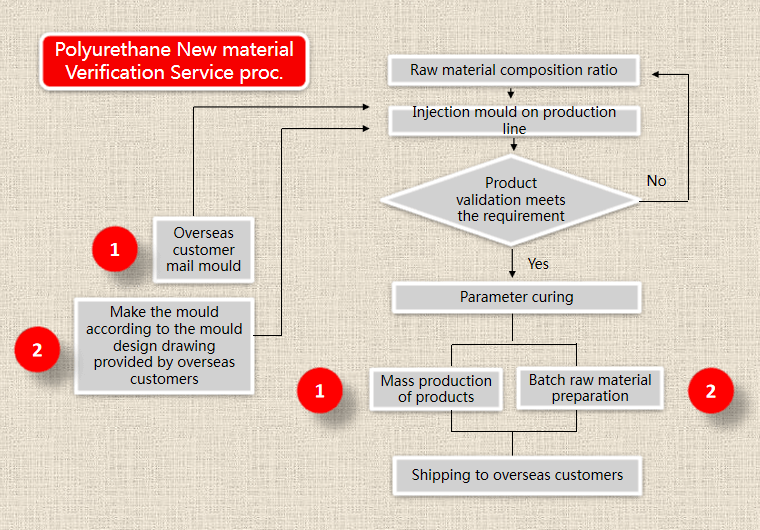
Manufacturing Process of Polyurethane
Polyurethane (PU) is a versatile polymer used in products ranging from mattresses and footwear to insulation panels, automotive components, coatings and adhesives. Unlike some plastics, polyurethane is generally not made by melting a ready-made resin. It is formed through a chemical reaction between carefully selected ingredients, most commonly a polyol and an isocyanate.
The manufacturing method depends on the product’s intended properties. Flexible foam, rigid insulation foam, elastomers, coatings and adhesives each require different formulations and processing conditions. However, most processes follow a series of common steps: formulation, metering, mixing, shaping, curing and finishing.
Selecting and preparing the raw materials
The main components are polyols and isocyanates. A polyol is a compound containing multiple hydroxyl groups, while an isocyanate contains reactive isocyanate groups. When combined, they react to form polyurethane. The choice of these materials affects properties such as flexibility, hardness, strength, resilience and resistance to heat or chemicals.
Formulations may also include additives to achieve specific performance or processing requirements. These can include catalysts, surfactants, blowing agents, colourants, flame retardants, fillers and stabilisers. Water can also be used in certain foam formulations; it reacts with isocyanate and helps generate carbon dioxide, which forms cells in the foam.
Before production, ingredients are stored and conditioned as required. Temperature, moisture and cleanliness are monitored because they can influence the reaction and the quality of the finished product.
Metering the ingredients
Polyols, isocyanates and additives are measured in precise proportions. The correct ratio is important: an imbalance can affect curing, strength, surface quality and other product properties. In industrial production, automated metering equipment is commonly used to deliver consistent quantities and help control the process.
Mixing and initiating the reaction
The ingredients are combined using suitable mixing equipment. Once the polyol and isocyanate meet, the chemical reaction begins. The mixture may become more viscous as it reacts, so thorough and timely mixing is essential to help achieve a uniform material.
For foam production, the formulation and processing conditions determine how cells form and expand. The result may be an open-cell structure, which is typically soft and compressible, or a more closed-cell structure, which is often used where insulation and dimensional stability are important.
Shaping the product
The reacting mixture is shaped according to the product and manufacturing method. It may be poured, sprayed, injected or dispensed into a mould, onto a surface or into a production line.
- Flexible foam: The mixture expands and rises, often as a large block that is later cut into sheets or shaped into components.
- Rigid foam: The reacting material is placed in a mould, cavity or panel structure, where it expands and cures. It is widely used for thermal insulation.
- Moulded parts: The formulation is injected or poured into a mould to create components with a defined shape and surface.
- Elastomers, coatings and adhesives: These materials may be cast, applied as a coating, or used to bond surfaces, depending on the formulation.
Curing
After shaping, the polyurethane is allowed to cure. During this stage, the reaction continues and the material develops its final structure and properties. Curing time and temperature vary according to the formulation, product design and production method. Some products cure at ambient conditions, while others may require controlled heating.
Demoulding and finishing
Once sufficiently cured, a moulded product can be removed from its mould. Depending on the application, the product may then be trimmed, cut, laminated, coated or assembled with other materials. Flexible foam blocks, for example, can be cut into sheets or specific shapes, while moulded components may undergo inspection and surface finishing.
Quality control
Quality checks help confirm that the product meets its required specifications. Depending on the application, manufacturers may assess dimensions, density, hardness, resilience, tensile strength, compression behaviour, adhesion, surface appearance and thermal performance. Process monitoring is also important, as consistent raw-material proportions and processing conditions help reduce defects and variation.
Safety and environmental considerations
Polyurethane manufacturing requires appropriate controls for chemical handling and workplace safety. Isocyanates can pose health risks, particularly through inhalation or skin and eye contact. Facilities should use suitable engineering controls, ventilation, training, safe handling procedures and personal protective equipment in line with applicable regulations and safety data sheets.
Manufacturers also consider waste reduction, energy use, emissions and the safe handling of production residues. Product design, process efficiency and suitable recovery or recycling routes can all contribute to improved resource use. The best approach depends on the type of polyurethane and the conditions in which it is produced and used.
A process shaped by the application
There is no single manufacturing method for all polyurethane products. The raw materials, formulation, equipment and processing conditions are selected to match the required performance and product design. By controlling each stage—from ingredient selection to curing and quality checks—manufacturers can produce polyurethane materials suited to a wide range of applications.
9 Essential Tips for the Polyurethane Manufacturing Process
- Choose polyols and isocyanates suited to the product.
- Measure ingredients accurately to maintain the target ratio.
- Keep raw materials dry; moisture can cause defects.
- Control temperatures during storage, mixing, and reaction.
- Use effective ventilation and appropriate protective equipment.
- Mix thoroughly but avoid introducing excess air.
- Pour or dispense the blend promptly into prepared moulds.
- Allow adequate curing time under specified conditions.
- Check finished parts for dimensions, strength, and surface defects.
Choose polyols and isocyanates suited to the product.
Choose polyols and isocyanates that match the product’s intended use and performance requirements. Their chemical structure and functionality influence important properties such as flexibility, hardness, strength, resilience and resistance to heat or chemicals. Selecting compatible materials—and using them in the correct proportions—helps ensure the polyurethane cures properly and performs reliably in its application.
Measure ingredients accurately to maintain the target ratio.
Measure each ingredient accurately to maintain the target ratio of polyol, isocyanate and additives. Even small variations can affect the reaction, curing and finished product properties, such as strength, flexibility and dimensional stability. Calibrated equipment and consistent measurement practices help ensure reliable quality from batch to batch.
Keep raw materials dry; moisture can cause defects.
Keep polyurethane raw materials dry and store them in sealed containers, as moisture can react with isocyanates and produce unwanted gas. This may lead to bubbles, voids or other defects in the finished product. Check storage conditions and follow suppliers’ handling guidance to help maintain consistent quality.
Control temperatures during storage, mixing, and reaction.
Control temperatures carefully during the storage, mixing and reaction stages of polyurethane manufacturing. Keep raw materials within the temperature ranges recommended by their suppliers, as temperature changes can affect viscosity, flow and reactivity. Consistent temperatures during mixing help ingredients combine evenly, while monitoring the reaction helps maintain predictable curing and product quality. Use suitable temperature controls and follow the formulation’s processing guidelines to reduce defects and improve batch-to-batch consistency.
Use effective ventilation and appropriate protective equipment.
Effective ventilation and appropriate protective equipment are essential when manufacturing polyurethane. Good ventilation helps reduce workers’ exposure to airborne chemicals, while suitable gloves, eye protection and other protective equipment help prevent skin and eye contact. Select equipment based on the materials being handled, follow safety data sheets and workplace procedures, and ensure workers are trained in its correct use.
Mix thoroughly but avoid introducing excess air.
Mix the polyurethane components thoroughly to ensure a uniform reaction and consistent product quality, but avoid whipping or mixing so vigorously that excess air is introduced. Trapped air can create unwanted bubbles, voids or surface defects, and may affect the material’s strength and appearance. Use the mixing method and speed recommended for the formulation, and keep the mixing head properly immersed where applicable.
Pour or dispense the blend promptly into prepared moulds.
Pour or dispense the freshly mixed polyurethane blend promptly into clean, prepared moulds, following the formulation’s processing instructions. The reaction can begin soon after mixing, causing the blend to thicken or expand, so delays may affect filling, cell formation and the finished product’s quality. Ensure the mould is correctly assembled and treated with a suitable release agent where required, and use appropriate safety controls when handling the chemicals.
Allow adequate curing time under specified conditions.
Allow polyurethane to cure for the full time specified for the formulation and application, maintaining the recommended temperature and humidity. Adequate curing enables the chemical reaction to progress and helps the material develop its intended strength, stability and performance. Handling or finishing it too early can lead to defects or inconsistent results, so always follow the supplier’s instructions.
Check finished parts for dimensions, strength, and surface defects.
Inspect finished polyurethane parts to confirm that their dimensions meet specifications and that they have the required strength. Check surfaces for defects such as cracks, bubbles, uneven areas or discolouration. Identifying these issues before the parts are packed or assembled helps maintain consistent quality and reduce waste.