
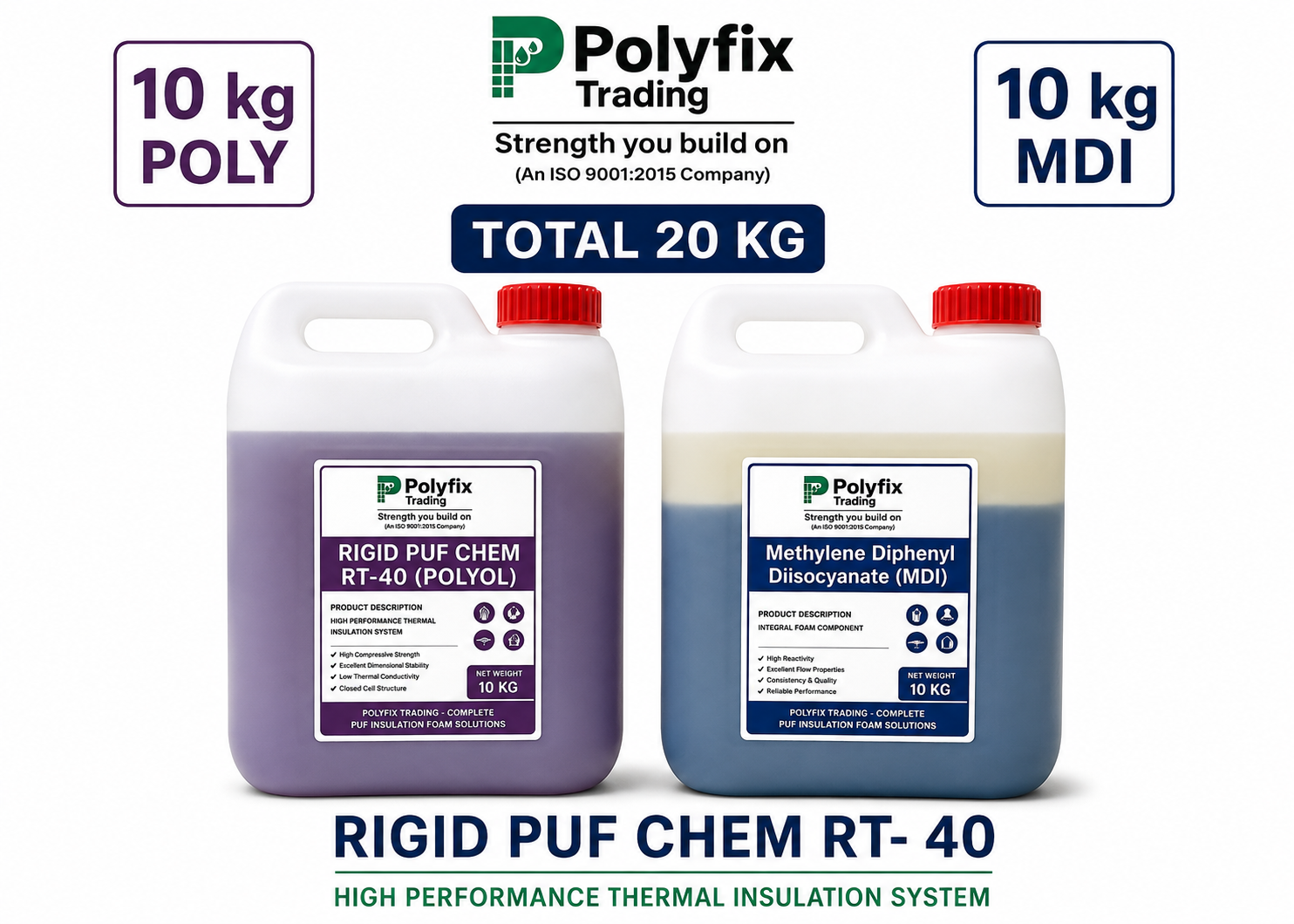
Liquid PUF Insulation Chemicals: Composition, Uses and Safety
Liquid PUF insulation chemical is used to produce polyurethane foam (PUF), a lightweight material that helps reduce heat transfer. PUF is commonly applied to roofs, walls, cold rooms, pipes and storage tanks. It is often installed by spraying or pouring liquid components that react and expand into foam.
What Does Liquid PUF Consist Of?
Most spray-applied PUF systems are supplied as two components, often called Part A and Part B. Their exact formulation varies by manufacturer and intended use.
- Isocyanate component: Usually contains polymeric methylene diphenyl diisocyanate (pMDI). It reacts with the other component to form the polyurethane structure.
- Polyol blend: Contains polyols and may include catalysts, surfactants, flame retardants and other additives. These ingredients influence the foam’s expansion, cell structure, curing and performance.
- Blowing agent: Helps create the foam’s cellular structure. The type used can affect insulation performance and environmental impact.
When the components are accurately proportioned and mixed, a chemical reaction causes the liquid to expand and harden. The resulting foam can form a continuous layer over many surfaces, helping to limit heat flow and air leakage.
Types of PUF Insulation
PUF is generally described as open-cell or closed-cell foam. Open-cell foam is lighter and more flexible, while closed-cell foam is denser and typically offers greater resistance to water vapour and higher insulation value per unit of thickness. The right type depends on the building or equipment, local conditions, design requirements and product specifications.
Common Applications
- Thermal insulation for industrial and commercial roofs
- Insulation in cold rooms, refrigerated warehouses and food-processing facilities
- Insulation for water heaters, tanks and process equipment
- Pipe insulation for industrial and HVAC systems
- Selected wall and ceiling insulation projects
Benefits and Factors to Consider
Properly installed PUF can provide effective thermal insulation, adhere to many suitable substrates and cover irregular shapes with relatively few joints. Its performance depends on the foam formulation, installed thickness, density, surface preparation and workmanship. The foam should also be protected where necessary from sunlight, fire, moisture or mechanical damage. For example, exposed foam may require a compatible protective coating or covering, as specified by the system supplier and project design.
PUF is not a one-size-fits-all solution. Before selecting a product, check its technical data sheet, intended application, declared thermal performance, fire-related properties, compatibility with the substrate and any relevant local requirements. A qualified insulation professional can help assess the site and specify the appropriate system.
Handling and Installation Safety
Uncured PUF chemicals require careful handling. Isocyanates can irritate the skin, eyes and respiratory system, and exposure may cause sensitisation. Spraying can create airborne droplets and vapours, so installation should be carried out by trained professionals using suitable engineering controls and personal protective equipment. The required precautions should follow the product safety data sheets and applicable regulations.
Keep people who are not involved in the work away from the application area. Follow the manufacturer’s instructions on ventilation, re-entry and curing times; these depend on the product and conditions at the site. Do not handle, mix or spray the chemicals without appropriate training and equipment.
Choosing a PUF Chemical System
When comparing liquid PUF insulation chemicals, consider more than the purchase price. Ask suppliers for the product’s technical and safety data sheets, recommended application conditions, component ratio, storage requirements, coverage guidance and warranty terms. Confirm that the installer is experienced with the specific system and that the finished insulation will receive any protection required for its intended environment.
With an appropriate formulation, sound design and professional installation, liquid PUF can be a useful insulation option for a wide range of buildings and industrial applications.
8 Essential Safety Tips for Using Liquid PUF Insulation Chemicals
- Use liquid PUF chemicals only as specified by the manufacturer.
- Have trained applicators handle and spray the chemicals.
- Wear chemical-resistant gloves, goggles, and suitable respiratory protection.
- Ensure good ventilation and keep people away during application.
- Keep the surface clean, dry, and ready before spraying.
- Mix components only in the recommended ratio and manner.
- Allow the foam to cure fully before trimming or covering it.
- Keep chemicals away from heat; follow local fire-safety and disposal rules.
Use liquid PUF chemicals only as specified by the manufacturer.
Use liquid PUF insulation chemicals only as specified by the manufacturer. Follow the recommended mixing ratio, application method, temperature range and curing instructions, and do not substitute or combine products unless the manufacturer confirms they are compatible. Always read the product’s technical and safety data sheets, and ensure trained installers use the required protective equipment and ventilation. This helps achieve the intended insulation performance while reducing the risk of faulty application or chemical exposure.
Have trained applicators handle and spray the chemicals.
Have trained applicators handle and spray liquid PUF insulation chemicals. These products can pose health risks before they cure, particularly during mixing and spraying, so installation should follow the manufacturer’s instructions and safety data sheets. Trained professionals use suitable equipment, ventilation and personal protective equipment, and can help ensure the foam is applied safely and correctly.
Wear chemical-resistant gloves, goggles, and suitable respiratory protection.
When handling liquid PUF insulation chemicals, wear chemical-resistant gloves, protective goggles and suitable respiratory protection to reduce the risk of skin, eye and inhalation exposure. Follow the product safety data sheet and the manufacturer’s instructions to select the right protective equipment, and ensure the work area is properly ventilated.
Ensure good ventilation and keep people away during application.
Ensure the work area is well ventilated when liquid PUF insulation chemicals are being applied, as vapours and spray mist may pose health risks. Keep occupants and other unauthorised people away from the application zone until the installer confirms that it is safe to return. Follow the product safety data sheet and the installer’s guidance on ventilation, protective equipment and re-entry times.
Keep the surface clean, dry, and ready before spraying.
Before spraying liquid PUF insulation, ensure the surface is clean, dry and properly prepared. Remove dust, oil, loose particles and any other contaminants, as these can prevent the foam from bonding evenly. Check for moisture and allow the surface to dry completely, following the product manufacturer’s preparation instructions. Good surface preparation helps the insulation adhere reliably and form a more uniform layer.
Mix components only in the recommended ratio and manner.
Mix the components of liquid PUF insulation only in the ratio and manner specified by the manufacturer. Accurate proportioning and thorough mixing help the chemicals react correctly, supporting consistent foam expansion, curing and insulation performance. Incorrect mixing may result in uneven or poorly cured foam. Always follow the product’s technical and safety data sheets, and ensure trained personnel use suitable protective equipment.
Allow the foam to cure fully before trimming or covering it.
Allow liquid PUF insulation foam to cure fully before trimming or covering it. Curing time varies with the product, temperature, humidity and application thickness, so follow the manufacturer’s instructions and technical data sheet. Cutting or covering foam too early can affect its finish, adhesion or performance; ensure the area is adequately ventilated and follow the specified safety and re-entry guidance during curing.
Keep chemicals away from heat; follow local fire-safety and disposal rules.
Store liquid PUF insulation chemicals in a cool, well-ventilated place, away from heat, sparks and open flames. Always follow the product safety data sheet and local fire-safety requirements, and dispose of unused chemicals and containers through approved channels—never pour them into drains or discard them with regular waste.