
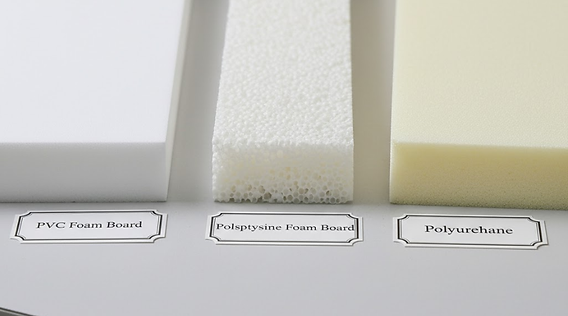
Polyurethane Foam Types: Properties, Uses and How to Choose
Polyurethane (PU) foam is a versatile material made by reacting polyols with isocyanates, along with other ingredients that influence its structure and performance. By adjusting the formulation and manufacturing process, producers can create foams ranging from soft and flexible to firm and rigid. These materials are used in furniture, appliances, buildings, vehicles, packaging and many other applications.
PU foams are commonly grouped by their flexibility, cell structure and method of manufacture. The main types include flexible foam, rigid foam, semi-rigid foam, integral skin foam and spray polyurethane foam.
Flexible polyurethane foam
Flexible PU foam is soft, resilient and able to compress under pressure before recovering much of its original shape. It is commonly used in mattresses, upholstered furniture, cushions, pillows, automotive seating and packaging.
Flexible foam can be made in different densities and firmness levels. Some grades are designed for comfort, while others are formulated for durability, support or specific cushioning needs. High-resilience (HR) foam is a type of flexible foam that offers a lively feel and good support. Viscoelastic foam, often called memory foam, responds to body heat and pressure and recovers more slowly after compression.
Rigid polyurethane foam
Rigid PU foam has a firm structure and is valued for its thermal insulation performance. It is used in building panels, roofs, walls, cold rooms, refrigerators, freezers, water heaters and insulated pipes.
Many rigid foams have a closed-cell structure. The cells trap gas, helping to limit heat transfer. The foam may be produced as boards or panels, formed in place, or used as the insulating core in a composite product. Its performance depends on factors such as formulation, density, thickness, installation quality and the design of the complete building or appliance system.
Semi-rigid polyurethane foam
Semi-rigid foam sits between flexible and rigid foam in terms of firmness. It can absorb impact and provide cushioning while maintaining more shape and support than a soft foam. Typical applications include automotive interior components, protective packaging, footwear and some industrial products.
Integral skin polyurethane foam
Integral skin foam is produced so that a dense outer skin forms around a lighter, cellular core. The outer surface can provide abrasion resistance and a finished appearance, while the foam interior offers cushioning. Applications include armrests, steering wheels, handles, protective pads and selected furniture components.
Spray polyurethane foam
Spray polyurethane foam (SPF) is applied as a liquid that expands and cures into foam. It is used for building insulation and air sealing, as well as in some commercial and industrial applications. SPF products are generally described as open-cell or closed-cell, based on the structure of their cells.
- Open-cell SPF is generally lighter and more flexible. It can provide insulation and help reduce air movement, but its moisture and vapour behaviour should be considered as part of the building design.
- Closed-cell SPF is typically denser and more rigid. It can offer strong insulation performance per unit thickness and may also contribute to air and moisture control when correctly specified and installed.
Spray foam installation requires suitable equipment, training and site controls. Product instructions, ventilation requirements and applicable building regulations should always be followed.
Other specialised PU foam forms
Some PU foams are developed for particular performance needs. Reticulated foam, for example, has an open, interconnected structure that allows air and liquid to pass through it. It is used in filtration, sound management, cleaning products and other specialised applications. Moulded foam is shaped in a mould to produce components with specific contours, such as vehicle seats or protective supports.
How to select a polyurethane foam
The right type of foam depends on the job it needs to perform. Important factors include:
- Comfort and support: Consider firmness, resilience, thickness and how the foam responds to repeated use.
- Insulation: Check the required thermal performance and whether the foam is part of a larger insulation system.
- Load and durability: Match the foam’s mechanical properties and density to the expected weight, impact and frequency of use.
- Moisture and airflow: Consider whether the application needs a breathable, open-cell structure or a more closed-cell construction.
- Fire and regulatory requirements: Confirm that the selected product and finished assembly meet the standards and regulations applicable to the intended use.
- Installation and maintenance: Follow the manufacturer’s guidance for handling, fitting, curing, cleaning and disposal.
Conclusion
Polyurethane foam is not a single material with one set of properties. Flexible, rigid, semi-rigid, integral skin and spray foams are designed for different purposes, while specialised forms such as memory foam and reticulated foam address particular needs. Selecting the right type involves matching its performance to the application and checking the relevant product specifications, safety guidance and regulatory requirements.
6 Key Benefits of Different Types of Polyurethane Foam
- Available in soft, flexible and firm forms.
- Provides cushioning and comfort.
- Rigid types offer effective thermal insulation.
- Can be moulded into complex shapes.
- Available in different densities and firmness levels.
- Used across furniture, buildings, vehicles and appliances.
7 Drawbacks of Different Types of Polyurethane Foam
- Flexible foam may lose support over time.
- Memory foam can retain body heat.
- Rigid foam may be difficult to remove or repair.
- Spray foam needs skilled installation.
- Some foam types are sensitive to moisture or sunlight.
- Fire performance varies by product and application.
- Recycling and disposal can be challenging.
Available in soft, flexible and firm forms.
Polyurethane foam is available in soft, flexible and firm forms, making it suitable for a wide range of uses. Soft foam can provide comfort in cushions and mattresses, flexible grades can absorb movement and repeated compression, while firmer foam offers support and stability in products such as seating, packaging and insulation systems. This range of options makes it easier to select a foam that suits the needs of a particular application.
Provides cushioning and comfort.
One of the key benefits of polyurethane foam is its ability to provide cushioning and comfort. Available in a range of softness and firmness levels, it can absorb pressure and help distribute body weight more evenly. This makes it suitable for mattresses, sofas, cushions, vehicle seats and footwear, where comfort and support are important.
Rigid types offer effective thermal insulation.
Rigid polyurethane foam is widely used for thermal insulation because its closed-cell structure helps reduce heat transfer. It can deliver effective insulation in a relatively thin layer, making it suitable for building panels, roofs, walls, cold rooms and appliances such as refrigerators. When correctly specified and installed as part of a complete system, rigid PU foam can help maintain indoor temperatures and improve energy efficiency.
Can be moulded into complex shapes.
Polyurethane foam can be moulded into complex shapes, making it suitable for products that need precise contours or customised designs. It can be formed around curves, recesses and detailed features, helping manufacturers create components such as automotive seats, cushioning, armrests and protective packaging. This design flexibility can also reduce the need for multiple parts, supporting efficient production and a neat finished appearance.
Available in different densities and firmness levels.
One of the key advantages of polyurethane foam is that it is available in a wide range of densities and firmness levels. This makes it easier to choose a foam suited to a particular purpose, from soft, comfortable cushioning for mattresses and furniture to firmer, more supportive foam for seating, packaging or insulation. Having these options also allows manufacturers to balance comfort, durability and performance to meet the needs of different products.
Used across furniture, buildings, vehicles and appliances.
Polyurethane foam types are used across a wide range of industries because their properties can be tailored to suit different needs. Flexible foam provides comfort and cushioning in furniture and vehicle seating, while rigid foam offers effective thermal insulation in buildings and appliances such as refrigerators. This versatility makes polyurethane foam a practical material for products that need comfort, support, impact absorption or insulation.
Flexible foam may lose support over time.
Flexible polyurethane foam may gradually lose some of its support with repeated use. Over time, compression and wear can reduce its resilience, making cushions or mattresses feel softer, less supportive or uneven. The rate of change depends on factors such as foam quality, density, frequency of use and care, so choosing a suitable grade for the intended application can help maintain comfort for longer.
Memory foam can retain body heat.
Memory foam can retain body heat, which may make a mattress or cushion feel warm during use, especially in hot and humid conditions. This can be uncomfortable for people who tend to sleep warm. Breathable covers, ventilated designs and bedding made from moisture-wicking materials may help improve airflow and comfort.
Rigid foam may be difficult to remove or repair.
Rigid polyurethane foam can be difficult to remove or repair, particularly when it has been applied in place or bonded firmly to a surface. Cutting it out may take time and can damage the surrounding structure, while patching the affected area may not fully restore the original insulation or seal. For this reason, careful installation and inspection are important, and repairs are best carried out using methods recommended for the specific foam and application.
Spray foam needs skilled installation.
Spray polyurethane foam needs to be installed by trained professionals using the correct equipment and application methods. Poor installation can result in uneven coverage, gaps or inadequate curing, which may reduce the foam’s insulation and air-sealing performance. The work also requires appropriate site preparation, ventilation and safety precautions, so it is important to follow the product manufacturer’s instructions and applicable regulations.
Some foam types are sensitive to moisture or sunlight.
Some types of polyurethane foam can be affected by moisture or prolonged exposure to sunlight. Moisture may reduce performance or contribute to deterioration, while UV rays can discolour and weaken exposed foam over time. Protection varies by product, so check the manufacturer’s guidance and use suitable coverings, coatings or installation methods where needed.
Fire performance varies by product and application.
Fire performance can vary significantly between polyurethane foam types and products, depending on their formulation, density, thickness and intended use. Some foams may require additional fire-retardant measures, and the performance of the finished product can also be affected by coverings, adhesives and surrounding materials. Always check product test data and ensure the complete assembly meets the fire-safety requirements applicable to its intended application.
Recycling and disposal can be challenging.
Recycling and disposal can be challenging for some types of polyurethane foam. Its complex composition, mixed materials and additives can make separation and processing difficult, while foam products may be bulky to store and transport. Recycling options also vary by product and location, so some foam may end up in landfill if suitable facilities are unavailable. Choosing products designed for recovery, checking local waste guidelines and using authorised recycling or disposal services can help reduce their environmental impact.