
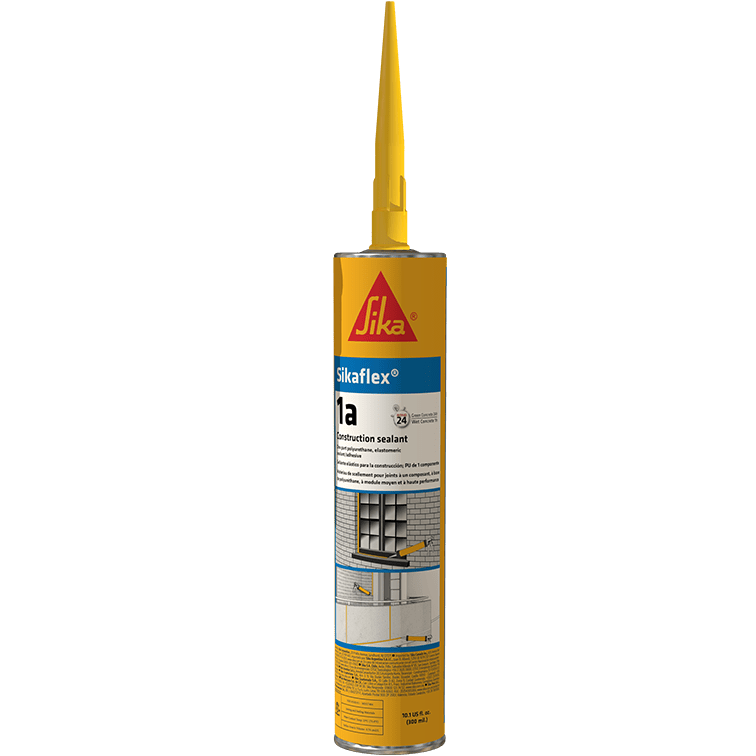
Sika Urethane Sealant: Uses, Benefits and Application Tips
Sika urethane sealants are designed to seal joints and gaps where flexibility and durable adhesion are important. Depending on the product, they may be used in construction, infrastructure, flooring, transport and industrial applications. Sika offers a range of sealants, so the right choice depends on the substrate, joint movement, exposure conditions and intended use.
What is a urethane sealant?
Urethane sealant, commonly referred to as polyurethane sealant, is an elastic material used to seal joints between surfaces. After application and curing, it forms a flexible seal that can accommodate movement caused by temperature changes, vibration or building settlement. Many polyurethane sealants are also paintable, although this should be confirmed for the specific product.
Where are Sika urethane sealants used?
Suitable applications vary by product. Depending on its technical specifications, a Sika polyurethane sealant may be considered for:
- Construction joints in walls, floors and façades
- Joints around windows, doors and other building components
- Sealing selected concrete and masonry joints
- Industrial or transport applications that require a flexible seal
- Joints exposed to movement, weather or vibration
Not every sealant is suitable for every application. For example, a product intended for building joints may not be appropriate for a particular flooring, glazing, potable-water or vehicle application. Always check the product label and technical data sheet before use.
Key benefits
When correctly selected and applied, polyurethane sealants can offer several practical benefits:
- Elasticity: Helps accommodate joint movement within the product’s stated limits.
- Adhesion: Can bond to various construction substrates, subject to surface preparation and compatibility.
- Weather resistance: Some formulations are designed for outdoor exposure. Confirm suitability for the expected conditions.
- Paintability: Certain products can be painted after curing; test compatibility with the chosen coating.
- Versatile applications: Different formulations are available for different joint dimensions and service requirements.
How to apply a polyurethane sealant
Good preparation is essential for a reliable seal. Follow the instructions supplied with the specific Sika product. General application steps include:
- Prepare the joint: Remove dust, oil, loose material and other contaminants. The surfaces should meet the product’s requirements for dryness and cleanliness.
- Check compatibility: Confirm that the sealant is suitable for the substrate. Use a primer only if the product instructions recommend it.
- Fit backing material where required: A backing rod can help control sealant depth and prevent three-sided adhesion. Follow the design guidance for the joint.
- Apply evenly: Use a suitable sealant gun and fill the joint without trapping air.
- Tool the sealant: Shape the surface within the stated working time, using only the methods and materials recommended by the manufacturer.
- Allow it to cure: Protect the joint from disturbance and exposure outside the product’s limits while curing.
Choosing the right Sika product
Before purchasing, consider the joint width and depth, expected movement, substrate type, indoor or outdoor exposure, temperature range and whether the joint will be painted. Check the current Sika technical data sheet and safety data sheet for the exact product available in India. These documents provide product-specific information on application, curing, storage, limitations and protective measures.
Safety and storage
Use the sealant in accordance with its safety data sheet. Provide suitable ventilation, wear the recommended protective equipment and avoid skin or eye contact. Store the product as directed on its packaging, and do not use it beyond its stated shelf life.
Conclusion
Sika urethane sealants can be a useful solution for flexible joint sealing when the product is matched to the application and applied correctly. Since formulations and performance vary across the range, consult the product documentation or a qualified construction professional before selecting a sealant for a critical or specialised use.
7 Essential Tips for Applying Sika Urethane Sealant
- Clean and dry the surfaces before application.
- Remove loose or old sealant for better adhesion.
- Use a backing rod for deep joints.
- Cut the nozzle to match the joint width.
- Apply a steady bead without gaps.
- Tool the sealant promptly, before it skins over.
- Follow the product label for curing time and safety precautions.
Clean and dry the surfaces before application.
Before applying Sika urethane sealant, make sure the surfaces are clean and dry. Remove dust, dirt, grease, loose particles and any old sealant, as contaminants can weaken adhesion and affect the quality of the seal. Allow damp surfaces to dry fully, and follow the product’s technical data sheet for any additional surface-preparation requirements.
Remove loose or old sealant for better adhesion.
Before applying Sika urethane sealant, remove any loose, damaged or old sealant from the joint. Residue can prevent the new sealant from bonding properly, so clean the surfaces thoroughly and ensure they are free from dust, oil and other contaminants. Follow the product’s preparation instructions to help achieve strong adhesion and a durable seal.
Use a backing rod for deep joints.
For deep joints, use a compatible backing rod to control the sealant depth and help achieve the correct joint shape. It also prevents the sealant from bonding to the bottom of the joint, encouraging adhesion to the two sides instead and allowing it to stretch more effectively as the joint moves. Choose a backing rod slightly larger than the joint width, fit it without stretching or puncturing it, and follow the instructions in the relevant Sika product data sheet.
Cut the nozzle to match the joint width.
Cut the nozzle to suit the width of the joint so the Sika urethane sealant can be applied neatly and evenly. A nozzle opening that matches the joint helps control the bead and reduce gaps or excess sealant. Start with a smaller opening if unsure, and follow the product instructions for the recommended application method.
Apply a steady bead without gaps.
Apply Sika urethane sealant as a steady, continuous bead, keeping the nozzle at a consistent angle and moving at an even pace. Ensure the sealant fills the joint fully, without gaps or trapped air, to help create a reliable seal. Tool the bead as directed in the product instructions and complete the work within the recommended working time.
Tool the sealant promptly, before it skins over.
Tool Sika urethane sealant promptly after application, while it is still workable and before a surface skin forms. This helps create a neat, smooth finish and ensures good contact with the joint edges. Follow the product’s technical data sheet for the recommended tooling method and working time, as these can vary by product and site conditions.
Follow the product label for curing time and safety precautions.
Always follow the product label for the recommended curing time and safety precautions when using a Sika urethane sealant. Curing times can vary depending on the product, joint size, temperature and humidity, so avoid disturbing or exposing the sealant to conditions outside the stated limits until it has cured. Use the protective equipment recommended on the label, ensure adequate ventilation and follow the instructions for safe handling and storage.