
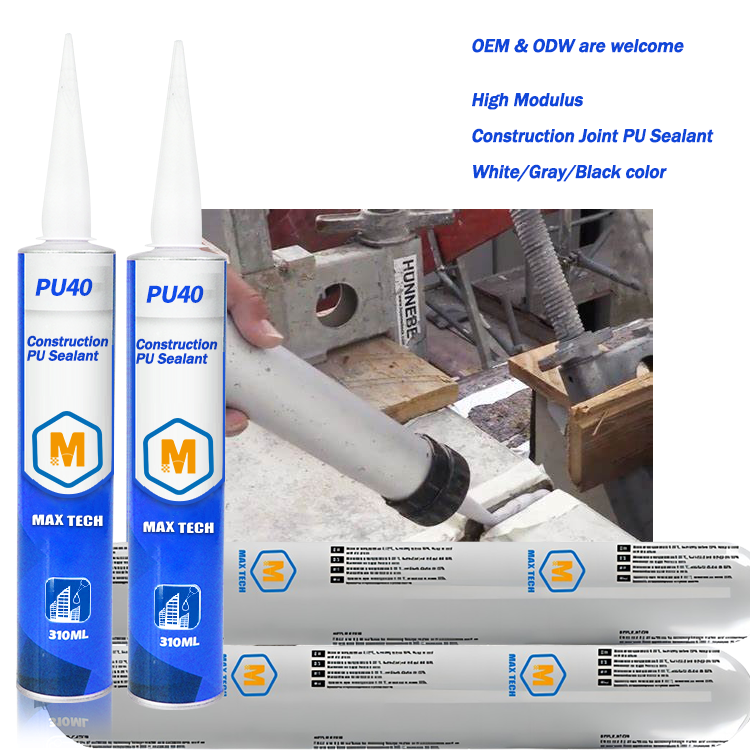
PU40 Sealant: Uses, Benefits and Application Guide
PU40 sealant is a polyurethane-based sealant commonly used to seal joints and gaps in construction, industrial and automotive applications. It is valued for its adhesion, flexibility and resistance to weathering. However, “PU40” is not a universal product specification: its exact composition, performance and recommended uses can differ between manufacturers. Always check the product’s technical data sheet before selecting or applying it.
What Is PU40 Sealant?
Polyurethane sealants are made to form a flexible, durable seal between surfaces. Many PU40 products are supplied as one-component sealants that cure when exposed to moisture in the air. Other formulations may have different curing methods. The “40” in the product name may refer to a particular grade or performance characteristic, but its meaning depends on the manufacturer.
Once cured, a suitable PU40 sealant can accommodate movement in a joint while helping prevent the passage of water, air and dust. It is generally used where a flexible seal is needed rather than a rigid filler.
Common Applications
Depending on the product’s stated suitability, PU40 sealant may be used for:
- Sealing joints in concrete, masonry and other building materials
- Filling expansion and connection joints in construction
- Sealing around doors, windows and façade components
- Sealing selected metal, timber or prefabricated components
- Automotive and industrial sealing tasks where a polyurethane product is specified
Not every PU40 sealant is suitable for every surface or application. For example, some products may not be recommended for certain plastics, natural stone, permanently immersed joints or areas exposed to specific chemicals. Confirm compatibility with the manufacturer before use.
Key Benefits
- Flexible performance: A cured polyurethane sealant can accommodate some joint movement, subject to the product’s movement rating.
- Good adhesion: Many formulations bond to common construction materials when surfaces are prepared correctly.
- Weather resistance: Products intended for exterior use can help protect joints from rain and environmental exposure.
- Versatile use: PU sealants are available for a range of construction and industrial requirements.
- Paintability: Some products can be painted after curing. Check the product instructions and test paint compatibility first.
How to Apply PU40 Sealant
- Check suitability: Review the technical data sheet for approved substrates, joint design, application temperature and curing conditions.
- Prepare the joint: Remove dust, oil, grease, loose material and old sealant. Surfaces should be clean and prepared as directed by the manufacturer.
- Use backing material where needed: A suitable backer rod can help control sealant depth and prevent three-sided adhesion. Follow the specified joint dimensions.
- Apply the sealant: Fit the cartridge into a sealant gun and apply a steady, continuous bead, ensuring good contact with the joint faces.
- Tool the bead: Smooth the sealant within the stated working time to create a neat finish and ensure contact with the joint sides.
- Allow it to cure: Protect the joint from water, dust and disturbance for the period specified on the product label. Curing time varies with the formulation, temperature, humidity and bead size.
Important Selection Considerations
Before purchasing PU40 sealant, consider the joint’s expected movement, width and depth, the materials being joined, whether the joint is indoors or outdoors, and its exposure to water, sunlight or chemicals. For structural or safety-critical work, use a product specifically approved for that purpose and follow the project specification.
Do not assume that all products labelled “PU40” have the same strength, flexibility, curing rate or weather resistance. Compare the manufacturer’s technical data sheet and safety data sheet, and seek professional advice for demanding applications.
Safety and Storage
Use PU40 sealant in a well-ventilated area and avoid contact with skin and eyes. Wear the protective equipment recommended by the manufacturer. Keep the product away from children, heat and ignition sources where applicable, and store it according to the label. Dispose of unused material and empty packaging in line with local requirements.
Conclusion
PU40 sealant can be a practical choice for sealing joints that require a durable, flexible bond. Its suitability depends on the specific formulation and the conditions at the installation site. Correct product selection, careful surface preparation and proper application are essential for a reliable result.
Top 5 Benefits of PU40 Sealant for Construction and Joint Sealing
- Flexible and accommodates joint movement.
- Adheres well to many common surfaces.
- Helps seal out water, air and dust.
- Suitable for a range of construction uses.
- Some formulations can be painted after curing.
7 Drawbacks of PU40 Sealant to Consider Before Use
- May take time to cure fully.
- Requires clean, well-prepared surfaces.
- Can be difficult to remove after curing.
- May need primer on certain materials.
- Not all products suit every substrate.
- Can be affected by moisture during application.
- Requires careful handling and ventilation.
Flexible and accommodates joint movement.
PU40 sealant remains flexible after curing, allowing it to accommodate the expansion, contraction and slight movement that can occur between adjoining surfaces. This flexibility helps maintain an effective seal as temperatures change or materials shift, reducing the risk of cracks and gaps. For best results, choose a product with a movement capability suited to the joint and follow the manufacturer’s application instructions.
Adheres well to many common surfaces.
PU40 sealant adheres well to many common surfaces, including concrete, masonry, metal and timber, when they are clean and properly prepared. This versatility makes it useful for sealing a range of joints in construction and repair work. As compatibility can vary by product and material, check the manufacturer’s instructions before application.
Helps seal out water, air and dust.
PU40 sealant helps seal joints and gaps against water, air and dust. Once applied and fully cured, it forms a flexible barrier that can help protect interiors from rainwater and draughts while limiting the entry of dust. For the best result, choose a product suitable for the surfaces and conditions, and follow the manufacturer’s application instructions.
Suitable for a range of construction uses.
PU40 sealant is suitable for a range of construction uses, making it a versatile option for projects that require flexible sealing. Depending on the manufacturer’s specifications, it can be used to seal joints in concrete, masonry, metal, timber and other building materials, including around selected doors, windows and façade components. Always check the product data sheet to confirm that it is compatible with the surfaces and conditions involved.
Some formulations can be painted after curing.
Some PU40 sealant formulations can be painted once fully cured, making it easier to match the seal to the surrounding surface or achieve a neat, consistent finish. As paint compatibility and curing times vary by product, check the manufacturer’s instructions and test the paint on a small area before applying it across the joint.
May take time to cure fully.
One drawback of PU40 sealant is that it may take time to cure fully. The curing period can vary depending on the product, joint depth, temperature and humidity, so the sealed area may need to remain undisturbed for longer than expected. Check the manufacturer’s instructions and avoid exposing the sealant to stress, water or finishing work until it has cured as recommended.
Requires clean, well-prepared surfaces.
PU40 sealant requires clean, well-prepared surfaces to form a reliable bond. Dust, oil, grease, moisture or loose material can reduce adhesion and may cause the seal to fail or peel over time. This means surfaces need to be thoroughly cleaned and prepared before application, adding extra time and care to the job.
Can be difficult to remove after curing.
Once cured, PU40 sealant forms a strong, durable bond that can make it difficult to remove. Taking it off may require careful cutting and scraping, and stubborn residue can take extra effort to clean without damaging the surface beneath. For best results, remove excess sealant before it cures and follow the manufacturer’s guidance when replacing an old seal.
May need primer on certain materials.
PU40 sealant may require a primer on certain materials to achieve reliable adhesion. This can add an extra step, increase application time and cost, and requires the correct primer to be selected for the substrate. Check the manufacturer’s instructions, as applying sealant without a recommended primer may lead to poor bonding or premature failure.
Not all products suit every substrate.
Not all PU40 sealants are suitable for every substrate. Adhesion can vary depending on the product formulation and the surface material, so a sealant that bonds well to concrete or metal may not perform reliably on certain plastics, natural stone or coated surfaces. Check the manufacturer’s technical data sheet for substrate compatibility, and carry out an adhesion test on a small area before full application.
Can be affected by moisture during application.
PU40 sealant can be affected by moisture during application, so wet surfaces or exposure to rain may interfere with adhesion and curing. For best results, apply it to clean, dry surfaces and protect the joint from water until it has cured as directed by the manufacturer.
Requires careful handling and ventilation.
PU40 sealant requires careful handling during application, as direct contact with the skin or eyes may cause irritation. Use it in a well-ventilated area to reduce exposure to vapours, and follow the manufacturer’s safety instructions. Wearing suitable gloves and protective eyewear can help minimise contact while the sealant is being applied.