
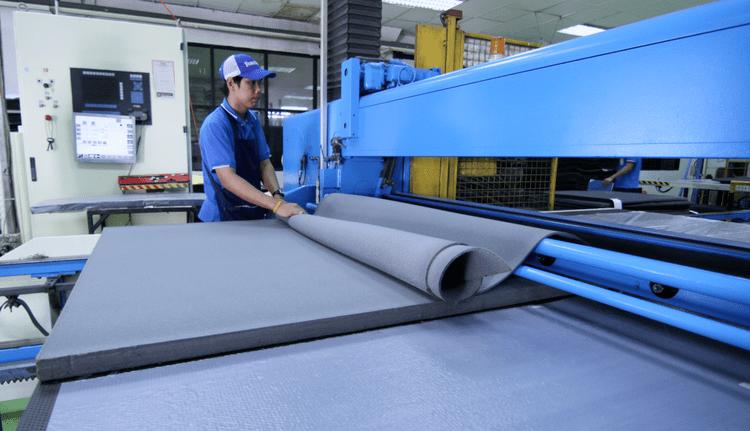
PU Foam Manufacturing Process: From Raw Materials to Finished Products
Polyurethane (PU) foam is a versatile material used in mattresses, furniture, automotive interiors, insulation, footwear and many other applications. Its properties can be adjusted to make soft, flexible foam or firm, rigid foam. The manufacturing process depends on the type of foam and its intended use, but most methods rely on a controlled chemical reaction between polyols and isocyanates.
What Goes into PU Foam?
The main raw materials are a polyol and an isocyanate. When these components react, they form polyurethane. Water or another blowing agent creates gas that expands the mixture into foam. Formulators may also use catalysts, surfactants, colourants, flame retardants and other additives to achieve the required properties.
The choice and proportion of ingredients affect characteristics such as density, firmness, resilience, cell structure, insulation performance and fire behaviour. Formulations are therefore developed for the product and manufacturing method, rather than being one-size-fits-all.
Key Stages in the Manufacturing Process
Preparation and dosing
Raw materials are stored and prepared under controlled conditions. The polyol blend, which may contain several additives, is measured and combined according to the formulation. Isocyanate is metered separately. Accurate dosing is important: variations can affect foam rise, consistency and final performance.
Mixing
The components are brought together using mixing equipment designed for the production method. Once the polyol blend and isocyanate meet, the chemical reaction begins. Mixing needs to be fast and consistent so that the ingredients are distributed evenly before the material starts to rise.
Foaming and expansion
As the reaction proceeds, heat is generated and the blowing agent creates gas bubbles. These bubbles expand the reacting mixture, forming a cellular structure. The foam rises in a mould or on a production line, depending on the product being made.
Curing
The foam is allowed to set as the reaction continues and its polymer structure develops. Some products require additional curing time or controlled conditioning before they can be handled or processed. Appropriate curing helps the foam achieve stable physical properties.
Cutting, moulding or finishing
Once cured, the foam is converted into the required shape. Flexible slabstock foam is commonly cut into sheets, blocks or profiled pieces. Moulded foam takes its shape inside a mould, while rigid foam may be made as boards, panels or insulated components. Finished parts may also be laminated, skinned or assembled with other materials.
Common PU Foam Production Methods
Flexible slabstock foam
In slabstock production, the reacting mixture is deposited on a moving conveyor and expands into a continuous block. After curing, the block is cut into sheets or other shapes. This method is widely used for mattresses, cushioning and upholstery.
Moulded foam
For moulded foam, the mixture is dispensed into a mould, where it expands and cures into a specific shape. This process is often used for automotive seating, footwear components and customised cushions. Moulding can create complex shapes and, in some cases, a finished surface directly on the part.
Rigid foam
Rigid PU foam is produced in forms such as insulation boards, panels and in-place insulation. The formulation and process are designed to create a firmer cellular structure with properties suited to thermal insulation and dimensional stability. Production may involve continuous lines, moulds or dispensing into a cavity.
Quality Control
Quality checks take place throughout production. Manufacturers may monitor raw-material condition, component ratios, mixing, foam rise and curing. Finished foam can be tested for properties such as density, hardness, resilience, compression set, dimensions and thermal performance. Tests are selected according to the product’s intended application and relevant requirements.
Process controls are also important for consistency. Temperature, equipment calibration, material storage and production conditions can all influence the result. A well-controlled process helps reduce defects and material waste.
Health, Safety and Environmental Considerations
PU foam manufacturing involves reactive chemicals that require careful handling. Facilities should follow applicable Indian regulations and supplier safety guidance, use suitable engineering controls and personal protective equipment, and provide worker training. Ventilation, spill response, safe storage and emergency procedures should be part of a comprehensive safety programme.
Manufacturers can also improve resource efficiency by optimising formulations, reducing scrap, maintaining equipment and managing production waste responsibly. Foam offcuts may be suitable for recovery or recycling through appropriate processes, depending on the material and local facilities. Product design and end-of-life planning can further support more responsible use of PU foam.
Conclusion
PU foam manufacturing combines carefully selected raw materials with controlled mixing, expansion and curing. Whether the result is flexible cushioning or rigid insulation, each stage influences the foam’s quality and performance. Consistent process control, appropriate testing and strong safety practices are essential to producing reliable PU foam products.
9 Essential Tips for an Efficient and Safe PU Foam Manufacturing Process
- Use consistent, tested formulations for each foam grade.
- Keep polyol and isocyanate within supplier-recommended temperature ranges.
- Calibrate metering and mixing equipment regularly.
- Maintain good ventilation and use suitable PPE when handling chemicals.
- Keep moisture out of raw materials and production equipment.
- Prepare clean, correctly conditioned moulds before pouring.
- Control mixing, pouring and curing times consistently.
- Check foam density, hardness and cell structure for quality.
- Store chemicals safely and dispose of waste as per local rules.
Use consistent, tested formulations for each foam grade.
Use consistent, tested formulations for each foam grade to achieve reliable quality from batch to batch. Even small changes in the proportions of polyols, isocyanates, blowing agents or additives can affect properties such as density, firmness, resilience and cell structure. Document approved formulations, measure ingredients accurately and validate any changes through controlled trials before introducing them into production.
Keep polyol and isocyanate within supplier-recommended temperature ranges.
Keep polyol and isocyanate within the temperature ranges recommended by their suppliers throughout storage and processing. Temperature can affect viscosity, flow and reactivity, which may influence metering, mixing, foam rise and the consistency of the finished product. Use suitable temperature monitoring and conditioning, and avoid heating or cooling materials beyond specified limits. Before production, confirm that both components have reached the required processing temperature and follow the relevant product and safety guidance.
Calibrate metering and mixing equipment regularly.
Calibrate metering and mixing equipment regularly to help maintain accurate ingredient ratios and consistent foam quality. Even small variations in the amounts of polyol, isocyanate or additives can affect foam rise, density and performance. Follow the equipment manufacturer’s recommendations, keep calibration records and check the system after maintenance or changes to the formulation. Regular calibration can also help reduce production defects and material waste.
Maintain good ventilation and use suitable PPE when handling chemicals.
Maintain good ventilation throughout the PU foam manufacturing process, particularly when measuring, mixing or transferring chemicals. Use suitable personal protective equipment (PPE), such as chemical-resistant gloves, protective clothing and eye protection, as specified by the product safety data sheets and workplace procedures. Provide staff with appropriate training and ensure that ventilation systems and safety equipment are regularly checked and maintained.
Keep moisture out of raw materials and production equipment.
Keeping moisture out of raw materials and production equipment is essential for consistent PU foam quality. Moisture reacts with isocyanate and can release carbon dioxide, causing unwanted bubbles, uneven cell structure, dimensional changes or other defects. Store materials in sealed containers under recommended conditions, and ensure tanks, transfer lines, mixing equipment and compressed air are dry before use. Regular checks for leaks and condensation can help prevent moisture-related problems and reduce material waste.
Prepare clean, correctly conditioned moulds before pouring.
Prepare moulds carefully before pouring PU foam. Ensure they are clean and free from dust, moisture, residue and leftover foam, as these can cause surface defects or affect the finished part. Condition each mould to the temperature specified for the process, and apply a suitable release agent evenly if required. A clean, correctly conditioned mould helps the foam fill and cure consistently, supports good surface quality and makes demoulding easier.
Control mixing, pouring and curing times consistently.
Consistent control of mixing, pouring and curing times is essential for producing uniform PU foam. Mix the components for the specified duration to ensure an even reaction, then pour promptly and consistently so the foam rises and fills the mould as intended. Allow adequate curing time before handling or further processing, as premature removal can affect the foam’s shape and properties. Follow the formulation and equipment guidelines, and monitor these timings throughout production to help minimise defects and maintain reliable quality.
Check foam density, hardness and cell structure for quality.
Check the foam’s density, hardness and cell structure as part of routine quality control. Density helps confirm that the correct amount of material has been used, while hardness indicates whether the foam provides the required level of support or flexibility. A uniform cell structure—with consistent, well-formed cells—can also point to even mixing and a stable manufacturing process. Compare results with the product specification and investigate any variations before the foam moves to cutting or finishing.
Store chemicals safely and dispose of waste as per local rules.
Store PU foam chemicals in clearly labelled, tightly sealed containers in a secure, well-ventilated area, following supplier instructions and applicable safety requirements. Keep incompatible materials separate and protect containers from heat, moisture and unauthorised access. Handle spills using approved procedures, and never pour chemical residues or waste down drains. Segregate, label and dispose of chemical waste and contaminated packaging through authorised channels, in accordance with local rules and regulations.