
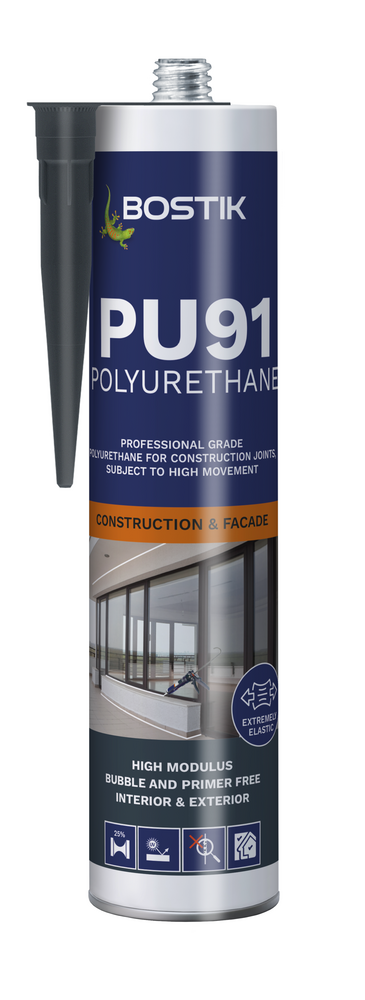
Bostik PU Sealant: A Practical Guide
Bostik PU sealant is a polyurethane-based sealant designed for sealing joints and gaps in building and construction applications. Depending on the specific product, it may be suitable for areas such as movement joints, façades, floors, precast concrete elements and other building connections. Product formulations and approved uses can vary, so check the relevant Bostik product label and technical data sheet before use.
What is a PU sealant?
Polyurethane (PU) sealants are flexible materials that cure after application to form a durable seal. Their elasticity can help accommodate movement between adjoining surfaces caused by temperature changes, vibration or building movement. They are commonly used where a joint needs to remain sealed while allowing some movement.
Potential benefits
Depending on the formulation and application, a Bostik PU sealant may offer:
- Flexibility to accommodate movement in a joint
- Adhesion to specified construction materials
- Resistance to weathering and moisture once cured
- A finish that can often be painted, where the product guidance permits
- Suitability for interior or exterior use, as stated for the particular product
These characteristics are not identical across every product. Confirm compatibility, movement capability, curing time, paintability and exposure limits in the product documentation.
Common applications
PU sealants are used in a range of construction settings. Depending on the product, applications may include sealing joints in concrete, masonry, metal or other approved substrates; perimeter joints around building components; and joints in floors or façades. Not every sealant is suitable for every substrate or exposure. For example, some products may have restrictions for use with natural stone, certain plastics, continuously immersed areas or food-contact environments.
How to apply Bostik PU sealant
- Check the product guidance: Confirm that the sealant is suitable for the joint, substrate and expected movement.
- Prepare the joint: Remove dust, oil, loose material and old sealant. The surfaces should be clean and prepared as directed by Bostik.
- Use backing material where required: A suitable backing rod can help control sealant depth and prevent three-sided adhesion. Follow the product instructions for joint design.
- Apply evenly: Fit the cartridge into a sealant gun and apply a continuous bead, ensuring good contact with the joint sides.
- Finish the bead: Tool the sealant within the recommended working time using the method specified on the product label.
- Allow it to cure: Protect the joint from disturbance, water or other exposure until the product has cured as directed.
Safety and storage
Read the product label and safety data sheet before use. Wear the recommended protective equipment, provide adequate ventilation and avoid contact with skin and eyes. Keep the product away from children and store it under the conditions stated by the manufacturer. Dispose of unused material and packaging in accordance with local requirements.
Choosing the right product
Bostik offers products for different sealing requirements, and the name “Bostik PU sealant” may refer to more than one formulation or pack size. Before purchasing, compare the intended application, substrate compatibility, joint movement, curing conditions and finish requirements with the product’s technical data sheet. For a demanding or unusual application, consult Bostik or a qualified building professional.
Conclusion
A Bostik PU sealant can be a useful option for creating flexible seals in construction joints when the selected product matches the application. Careful joint preparation, correct application and adherence to the manufacturer’s instructions are essential for a reliable result.
7 Key Benefits of Bostik PU Sealant for Construction Projects
- Flexible seal for movement joints
- Good adhesion to approved substrates
- Helps resist weather and moisture
- Suitable for many construction applications
- Can create a neat, durable finish
- Some formulations are paintable
- Easy to apply with a sealant gun
Limitations of Bostik PU Sealant
- Requires careful surface preparation.
- Curing can take time, depending on conditions.
- May need a sealant gun and suitable tools.
- Not suitable for every surface or application.
Flexible seal for movement joints
Bostik PU sealant provides a flexible seal for movement joints, helping accommodate the small expansions, contractions and shifts that can occur in building materials due to temperature changes or structural movement. This flexibility helps maintain a continuous seal and can reduce the risk of gaps forming over time. For best results, choose a product suitable for the joint and follow the manufacturer’s guidance on joint preparation and application.
Good adhesion to approved substrates
Bostik PU sealant offers good adhesion to approved substrates, helping create a dependable seal when the surfaces are properly prepared. For best results, ensure they are clean and dry, and check the product’s technical data sheet to confirm compatibility and any priming requirements.
Helps resist weather and moisture
Bostik PU sealant can help protect joints from weather and moisture when it is used in an approved application and applied correctly. Once cured, its flexible seal helps limit water ingress while accommodating some joint movement caused by changing temperatures and outdoor conditions. Always check the product’s technical data sheet for suitability, preparation and curing requirements.
Suitable for many construction applications
Bostik PU sealant is suitable for many construction applications, making it a versatile choice for sealing joints and gaps in building projects. Depending on the specific product, it may be used on approved substrates such as concrete, masonry and metal, including in applications around façades, floors and building components. Always check the product’s technical data sheet to confirm that it is appropriate for the materials and conditions involved.
Can create a neat, durable finish
Bostik PU sealant can help create a neat, professional-looking finish when applied to a properly prepared joint. Its smooth, flexible bead can seal gaps while accommodating movement, helping the joint remain tidy and durable over time. For the best result, follow the product instructions for application and finishing.
Some formulations are paintable
Some formulations of Bostik PU sealant can be painted once fully cured, making it easier to achieve a neat, coordinated finish with surrounding walls, trims or other surfaces. Always check the product’s technical data sheet for curing times and paint compatibility, and test the paint on a small area before full application.
Easy to apply with a sealant gun
Bostik PU sealant is easy to apply with a standard sealant gun, making it convenient for both professionals and DIY users. The gun helps dispense the sealant in a steady, controlled bead, so it can be applied neatly along joints and gaps with less mess. For best results, prepare the surface and follow the product instructions for application and finishing.
Requires careful surface preparation.
Bostik PU sealant requires careful surface preparation to achieve reliable adhesion and a durable seal. Dust, moisture, oil, loose material or traces of old sealant may affect bonding, so the joint surfaces must be cleaned and prepared according to the product instructions before application. This extra preparation can add time to the job, particularly on older or uneven surfaces.
Curing can take time, depending on conditions.
One drawback of Bostik PU sealant is that curing can take time, and the duration may vary with temperature, humidity, joint depth and ventilation. The sealant may need to be protected from disturbance or moisture while it cures, which can delay follow-on work. Always check the product’s technical data sheet for the recommended curing conditions and timings.
May need a sealant gun and suitable tools.
One drawback of Bostik PU sealant is that application may require a sealant gun and suitable finishing tools. These add to the initial cost and can be inconvenient for small or occasional jobs, particularly if the right equipment is not readily available.
Not suitable for every surface or application.
Bostik PU sealant is not suitable for every surface or application, as adhesion and performance can vary depending on the material, joint design and environmental conditions. Some substrates may require special preparation or a primer, while certain applications—such as areas with continuous water immersion or contact with specific chemicals—may need a different sealant. Always check the product’s technical data sheet and test compatibility on a small area before use.